

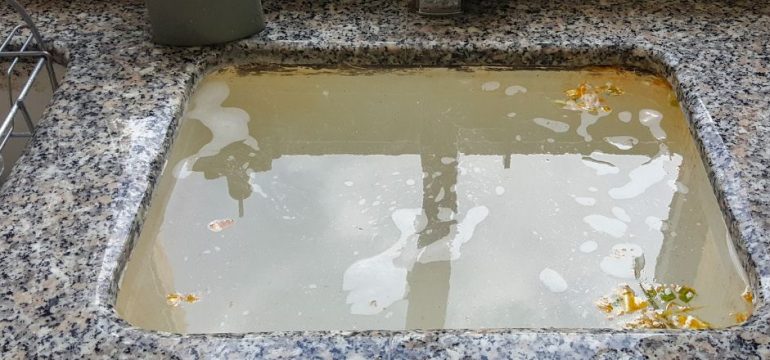
Nothing kills the professional atmosphere of a business quite like a persistent, foul drain odour. For facility managers and business owners, it is a constant source of frustration, especially when standard daily cleaning routines fail to make an impact. If you have found yourself reaching for store-bought drain cleaners or trying “hacks” found online, you have likely discovered that these methods offer only temporary relief, if they work at all.
The reality is that foul smells in commercial settings rarely stem from simple surface-level blockages; they are usually a symptom of deeper, hidden structural issues within your plumbing network. From the “flypaper effect” of solidified grease in kitchen lines to a rock-hard build-up of uric scale in washrooms, the problem is often far more complex than it appears.
In this post, we uncover exactly what is causing those persistent odours. We will examine why traditional DIY methods are ineffective and potentially harmful to your infrastructure, and why understanding the true source of the smell is the first step towards maintaining a safe, compliant, and odour-free environment. This article covers:
- The kitchen culprits: fats, oils and greases (FOG)
- Structural and systemic drainage failures
- Why DIY hacks can make your drain odour problem worse
- The real cost of persistent odours
- What are your legal and statutory obligations?
- Put drainage problems to rest with an expert solution
The kitchen culprits: fat, oil and grease (FOG)
In a commercial kitchen, the drainage system is subjected to daily, heavy-duty strain from the large volumes of fats, oils and greases (FOG) handled during food preparation and cooking. Even with the best intentions and standard pre-scraping practices, significant amounts of FOG inevitably escape down the sink line.
To understand why commercial kitchen drains develop such a repulsive, persistent odour, we have to look at what happens beneath the stainless steel surfaces:
1. The high-temperature illusion and solidification
Commercial dishwashers and pot-washing sinks operate at high temperatures. While this hot water keeps FOG in a liquid state in the sink, the wastewater cools as it travels further down the drainage network. Once cooled, the FOG solidifies, adhering to the internal walls of the PVC or cast-iron pipework and over time, grease builds up in concentric layers, drastically narrowing the pipe’s diameter.
2. The “flypaper” effect and bacterial fermentation
This layer of solidified grease is sticky, coagulated and highly viscous. It acts like flypaper inside your drains. Microscopic food particles, such as heavy starches, coffee grounds and other organic matter, passing down the line, become embedded in the grease lining.
- Anaerobic fermenting grounds: Deep within this thick, oxygen-deprived layer of FOG and food, anaerobic bacteria begin to thrive.
- Odour generation: As these bacteria digest the trapped organic waste, they ferment it. This process releases volatile organic compounds (VOCs) that have a sour, rancid and putrid odour. The hot air and the extraction fans in your kitchen create a chimney effect, pulling foul smells directly from the floor drains and sinks into your prep areas.
3. The failed or neglected grease trap paradox
Grease traps (or interceptors) are legally mandated to catch FOG before it reaches the main sewer line. However, if they are not professionally managed, they quickly become the primary source of kitchen odours.
- The holding vat: A grease trap works by slowing the flow of wastewater, allowing lighter grease to float to the top and solids to sink to the bottom. If the trap is not regularly pumped and thoroughly cleaned, the retained grease can turn rancid, and the standing water inside the trap becomes oxygen-deprived and stagnant.
- The result: The trap essentially becomes a brewing vat for hydrogen sulphide and methane gases. When a large volume of water hits the trap (such as draining a commercial sink), it displaces these gases, forcing a pocket of foul air backwards through the kitchen’s internal drainage network.
Structural and systemic drainage failures
Persistent, hazardous odours in commercial buildings often signal deeper plumbing issues, rather than just surface waste.
Mould, mildew and ‘dead legs’
Often described as an ‘earthy’ or ‘musty’ smell, this is caused by stagnant pipework.
- The issue: ‘Dead-legs’ are abandoned pipe sections left behind during renovations.
- The result: Because water no longer flows, these areas become stagnant breeding grounds for mould and fungal growth.
- The ‘chimney effect’: As spores multiply, they release microbial volatile organic compounds (mVOCs) that are forced up into your building whenever active drains are used.
- The fix: Surface scrubbing won’t work. You need specialist structural tracking to isolate and treat hidden infestations.
Failed P-traps and sewer gas
A functioning P-trap creates a water barrier that prevents sewer gases from rising through a sink or floor drain. When these fail due to evaporation or damage, the consequences are serious.
- The warning sign: A sharp ‘rotten egg’ smell.
- The risk: This is a major health and safety issue, not just a cosmetic one. Toxic gases such as hydrogen sulphide (H2S) entering your working areas can cause staff headaches, dizziness and nausea.
- The solution: You cannot mask this with air fresheners. It requires professional diagnostics (such as CCTV surveys and smoke testing) to ensure your building remains compliant.
Uric scale build-up
Washroom odours characterised by a sharp, ammonia-like stench are typically caused by uric scale.
- What is it? A rock-hard, crystalline deposit that builds up inside the urinal and toilet pipework.
- Why it happens: Uric acid reacts with flushing water to create a rough, porous crust that traps waste.
- The cause of the odour: Bacteria thrive in this crust, breaking down urea into pungent ammonia gas.
- The risk: This scale constricts the pipe diameter, significantly increasing the risk of catastrophic drainage backups.
Why DIY hacks can make your drain odour problem worse
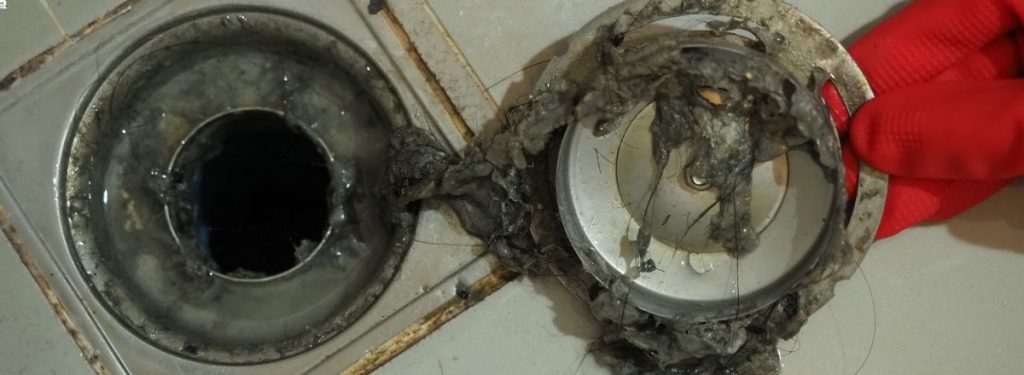
When foul odours strike, the temptation to reach for ‘quick-fix’ household remedies is understandable. However, commercial drainage systems operate at a different scale than domestic kitchen drainage systems. Applying residential ‘hacks’ is not only ineffective but can escalate a minor smell into a costly structural emergency.
The domestic hacks that will fail
Tips intended for residential sinks are ineffective against commercial-grade blockages.
- The baking soda and vinegar illusion: This mild reaction is purely cosmetic. It flows harmlessly over rock-hard uric scale and thick grease without cleaning the pipe lining.
- The boiling water trap: Boiling water only temporarily liquifies FOG, pushing it further into your plumbing, where it can resolidify as deep, inaccessible blockages.
- The bleach failure for uric acid: Standard cleaners and bleach only disinfect the surface; they cannot dissolve the solid, crystalline scale. This requires professional acidic chemical treatments or mechanical descaling to safely remove the obstruction without damaging the plumbing.
The hidden dangers of chemical flushers
When household tricks fail, off-the-shelf corrosive cleaners are often the next step. Avoid these for the following reasons:
- Pipe damage: Strong acids and alkalis generate intense heat. This can warp PVC, corrode cast-iron joints and cause hidden leaks inside your walls or floors.
- Toxic pools: If a drain is blocked, chemicals pool into a stagnant, toxic soup. This creates a hazardous environment for maintenance engineers, significantly driving up repair time and costs.
The real cost of persistent odours
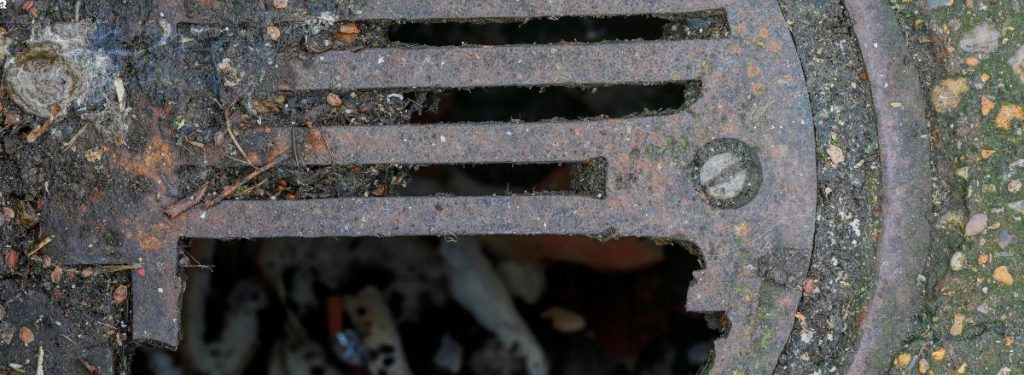
In a commercial environment, ignoring foul odours triggers a domino effect of operational, financial, and reputational damage. An unaddressed smell exposes your business to three major risks:
1. Reputation and customer experience
Your environment is your brand. Customers are hardwired to associate foul odours with disease and poor hygiene, instantly invalidating your service quality.
- Hospitality: A foul drain smell kills appetites and drives negative online reviews that deter future diners.
- Retail: Bad odours reduce “dwell time”, causing customers to leave before making a purchase.
- Healthcare: Foul smells signal a fundamental lack of clinical standards, eroding trust with patients and families.
2. The invitation for pests
Foul-smelling drains act as a beacon for pests. The organic sludge causing the smell, whether it’s kitchen FOG or stagnant pipe water, is an attractive food source and a primary breeding ground for certain pests.
- Drain flies (Psychodidae spp.): These tiny flies lay eggs directly in the organic grease and slime lining of your pipes, leading to rapid, difficult-to-control infestations.
- Cockroaches: Drainage systems serve as subterranean highways, allowing them to enter your premises and contaminate food-contact surfaces with pathogens such as Salmonella and E. coli.
3. Operational downtime and emergency costs
A persistent odour is often the final warning sign before a total system failure.
- Catastrophic back ups: When a restricted pipe is blocked, greywater or raw sewage can flood food prep areas or public washrooms.
- Financial impact: You are legally required to shut down for emergency sanitisation if sewage is present. A single weekend closure can cost thousands in lost revenue and will likely exceed the cost of preventative, professional maintenance.
What are your legal and statutory obligations?
Failing to maintain hygienic, free-flowing drainage systems doesn’t just cause odours; it invites regulatory intervention, heavy fines and potential criminal prosecution.
1. Food safety and contamination risks
Under the Food Safety Act 1990 and associated hygiene regulations, you are legally required to keep premises clean and free from contamination.
- The violation: A foul odour is not just a nuisance; it is physical evidence of bacterial decomposition and poor hygiene.
- The risk: Regulators view persistent drain odours as a failure of your duty to provide a safe environment, which can trigger an immediate inspection of your contamination controls.
2. Environmental compliance and liability
Disposing of FOG incorrectly is a criminal offence under the Water Industry Act 1991.
- Zero-tolerance: Pouring FOG down drains contributes to public sewer “fatbergs”. You are liable for the damage.
- Duty of care: Under the Environmental Protection Act 1990, if your grease traps fail due to poor maintenance and cause downstream blockages, utility companies can prosecute your business and bill you directly for the cost of clearing the public sewer network.
3. The public cost: hygiene ratings
Environmental Health Officers (EHOs) evaluate physical infrastructure, including drainage, as part of a restaurant’s formal food hygiene score.
- The “smell penalty”: An odour often prompts a deeper investigation. If EHOs find evidence of unmaintained, clogged pipes or pest activity, your rating will drop.
- Prohibitory powers: If sewage back ups are found, authorities can issue a Hygiene Emergency Prohibition Notice and shut your doors immediately.
4. Alignment with HACCP requirements for a defensible audit trail
Functional drainage is a mandatory prerequisite for a valid food business HACCP (Hazard Analysis and Critical Control Point) system.
- Proof of control: You cannot claim to control food safety hazards if your infrastructure is actively venting gases and airborne microorganisms.
- The audit shield: Incorporating professional deep-cleaning into your maintenance schedule provides an undeniable paper trail. It proves to auditors and inspectors that you are proactively managing your statutory obligations, rather than waiting for a crisis to occur.
Put drainage problems to rest with an expert solution
Industrial-scale odours require more than a quick fix. To protect your brand, compliance, and bottom line, you need a proactive strategy that moves beyond reactive cleaning.
Rentokil Specialist Hygiene provides a comprehensive, end-to-end drainage solution:
- Advanced diagnostics: We use CCTV surveys and smoke testing to identify the root cause, whether structural failure, P-trap issues, or deep-seated blockages, without unnecessary disruption.
- Industrial-grade clearance: From high-pressure jetting to electro-mechanical descaling of uric scale and FOG, we restore full pipe capacity and eliminate bacterial breeding grounds.
- Proactive grease trap management: We ensure total compliance with regular grease trap servicing and use biological dosing to prevent organic build-up before it starts.
- Bespoke maintenance: We build a tailored prevention schedule that keeps your systems compliant and provides the defensible audit trail required by environmental health officers.
Don’t wait for a subtle odour to become a business-critical emergency. Partner with the UK’s specialist hygiene experts to maintain a safe, odour-free environment.
FAQs
Standard daily cleaning focuses on visible, surface-level waste. Persistent odours in commercial settings usually stem from deeper, hidden issues that routine cleaning cannot reach. These include solidified fat, oil and grease (FOG) build-up inside pipes, uric scale deposits in washroom fixtures, or “dead legs” — abandoned sections of pipework where water stagnates, creating a breeding ground for mould and bacteria.
Commercial drainage systems operate on a different scale than residential ones. Standard DIY “hacks” such as baking soda, vinegar, or boiling water provide only temporary relief and can push blockages further into your system. Even worse, corrosive chemical cleaners can damage your infrastructure by warping PVC pipes or corroding cast-iron joints, leading to costly leaks.
Yes. Persistent odours are often considered evidence of bacterial decomposition and poor hygiene standards. Under the Food Safety Act 1990, this can trigger emergency inspections. Furthermore, you face legal liability under the Water Industry Act 1991 if your grease management fails, leading to downstream blockages or “fatbergs” in the public sewer network.
The organic sludge, such as kitchen FOG (fat, oil and grease) or stagnant pipe water, that causes drain smells, is a primary food source and breeding ground for pests. Drain flies lay eggs directly in the grease lining of pipes, and drainage systems can serve as subterranean highways for cockroaches to enter your premises and contaminate food-contact surfaces.
General cleaning is a surface-level activity. In contrast, specialist hygiene treatment uses advanced diagnostics, such as CCTV surveys and smoke testing, to identify the specific root cause of the problem. Services include high-pressure jetting and mechanical descaling to remove stubborn uric scale or FOG, and proactive grease trap management to ensure long-term compliance and system health.