

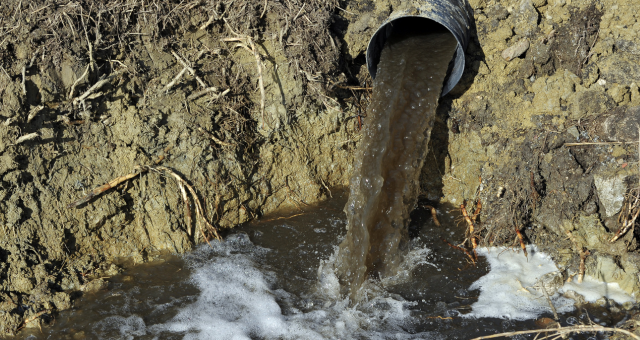
Black water is a hazardous form of domestic water ingress into a property (classed as Category 3, with clean water being Category 1 and grey water Category 2). It is wastewater that is grossly contaminated with pathogenic microorganisms, toxic substances and organic waste. It originates from sources such as sewage backflows, toilet discharges, river flooding and surface run-off. Black water poses an immediate and significant risk to human health due to its potentially high microbial load, including bacteria, viruses, parasites and fungi that can cause serious illness.
In the UK, where a large proportion of buildings have ageing drainage systems or are situated on low-lying land, the risk of black water ingress in some areas, especially during heavy rainfall or flooding, is considerable. Black water can rapidly penetrate porous building materials such as timber, plasterboard and insulation, creating persistent reservoirs of contamination that weaken structural integrity, encourage mould growth and cause long-term indoor air quality problems.
Without prompt and appropriately controlled remediation, residual contamination can lead to chronic health effects and render a property uninhabitable. Understanding the nature, risks, and appropriate response to Category 3 water contamination is therefore essential for homeowners, property managers and building professionals. This article covers:
- What are the types of hazardous water?
- Why is the UK particularly prone to sewage ingress problems?
- The problem with suspended floors in older UK houses
- What are the health risks of black water ingress into homes?
- What to do in the first hour of a sewage ingress
- Why you should get professional help to clean up a black water event
What are the types of hazardous water?
In the UK, water contamination in buildings is usually classified by the level of contamination and the associated health risks. The three main categories, often referenced in insurance, environmental health and remediation services, are outlined below.
Category 1: clean water
Water originating from a sanitary, potable source with no significant contamination.
- Typical sources:
- Burst mains supply pipes.
- Leaking taps or appliance supply lines.
- Rainwater before contact with contaminants (e.g. roof leaks in early stages).
- Risk profile: Initially low risk to human health. However, time-dependent degradation is critical: microbial growth can rapidly convert clean water into Category 2 or 3 within 24–48 hours.
Implications in UK homes: Common in older housing stock with ageing plumbing. Often underestimated, leading to delayed drying and a subsequent increase in mould growth.
Category 2: grey water
Water containing a significant level of chemical, biological or physical contaminants that may cause discomfort or illness upon exposure.
- Typical sources:
- Washing machine and dishwasher discharge.
- Bath, shower and sink wastewater.
- Minor sewer backflows without solid waste.
- Risk profile: Contains microorganisms, detergents, nutrients and organic matter. It can cause gastrointestinal or dermatological issues. Rapidly progresses to Category 3 if left untreated.
- Implications in UK homes: Common in domestic flooding scenarios involving appliance failures. Frequently associated with biofilm formation and early-stage microbial colonisation in porous materials.
Category 3: black water
Grossly contaminated water containing pathogenic organisms and potentially toxic substances.
- Typical sources:
- Sewage backflow, often triggered by blocked drains, collapsed sewer lines or overcharged municipal systems that force wastewater back through toilets or floor drains.
- Floodwater from rivers, coastal surges or urban runoff that brings contaminants such as soil, chemicals and animal waste into the property.
- Toilet overflows involving faecal matter.
- Degradation of clean or grey water (Category 1 or 2) can quickly become black water if left untreated for 24–48 hours, especially in warm conditions, as bacteria rapidly multiply.
- Risk profile: High risk: may contain bacteria (e.g. E. coli), viruses, parasites and fungi. Exposure can lead to serious infections, including gastrointestinal, respiratory and systemic illness.
- Implications in UK homes: Increased risk in areas with combined sewer systems, especially during heavy rainfall events. Flood-prone regions (e.g. parts of the Somerset Levels, Yorkshire, and the Thames Valley) regularly experience Category 3 contamination. Requires specialist remediation, including removal of contaminated materials and disinfection.
Why is the UK particularly prone to sewage ingress problems?
The drainage infrastructure in the UK is a complex patchwork of Victorian vitrified clay, pitch-fibre pipes (1940s–70s), cast iron and modern plastic pipes. Because of the wide variation in the quality of the pipework, sewage doesn’t always enter a home through a simple overflow. It often involves a combination of structural failure and external pressure.
The combined sewer overload
Many older UK towns and cities rely on combined sewer systems, where a single pipe carries both foul water (from toilets/sinks) and surface water (rainwater from gutters). During heavy downpours, the volume of rainwater can exceed the pipe’s capacity.
- The result: The system reaches a surcharge state. The excess water, now a mixture of rain and raw sewage is forced back up the household lateral pipes and enters the home through the lowest points, usually ground floor toilets or shower trays.
Blocked shared lateral drains
A unique feature of UK terraced and semi-detached housing is the shared lateral drain. This is a pipe that collects waste from several houses before it reaches the main public sewer in the street. If a neighbour several doors down flushes “unflushables” (wet wipes, sanitary pads, fats or oils), a blockage can form.
- The result: Waste from all the homes upstream of the blockage has nowhere to go. It backs up the system and spills out into the house closest to the blockage, even if that homeowner has done nothing wrong.
Fatbergs in the main sewer
The UK’s ageing sewer network is becoming more susceptible to fatbergs, which are large, congealed masses of fat, oil, grease and wet wipes that act like dams in main sewers.
- The result: When the main sewer line becomes completely blocked, the sewage being pumped from many homes has to go somewhere. The pressure forces it back up the domestic connections, resulting in a high-pressure fountain effect from any ground floor toilets.
Root intrusion and pipe collapse
Many UK gardens have mature trees whose roots are naturally attracted to the moisture inside old clay pipes. Fine root hairs enter tiny cracks in the pipe, eventually growing into thick root balls that trap debris. In some cases, the weight of the soil or cracks in a pipe can cause it to collapse.
- The result: This creates a soft blockage that might allow grey water from sinks through slowly, but will block black water from toilet flushing, leading to a slow-motion flood that often goes unnoticed until it has saturated a sub-floor void common in older houses.
Septic tank or cesspit failure
For the roughly 5% of UK homes not connected to the main sewer network (mostly in rural areas), sewage entry is usually due to a failed soakaway or a full septic tank. If the soakaway (the field where liquid waste drains) becomes waterlogged or blocked by silt, the tank cannot drain.
- The result: Sewage backs up the incoming pipe and re-enters the house. In these cases, the water is often highly concentrated and carries a higher biohazard risk.
The problem with suspended floors in older UK houses
About 10 million homes in the UK have suspended wooden flooring on the ground floor, mostly dating from before the 1950s. This type of flooring can pose a unique risk to homes when there is a black water hazard.
- The sub-floor void: There is typically a crawl space or void beneath the floorboards. If sewage enters this area, it can pool on the soil or concrete below the joists.
- Hidden contamination: Even if you clean the floorboards, the black water trapped in the dark, damp void remains a biohazard and a source of persistent foul odours and mould.
- Ventilation spread: Because these floors rely on air bricks for ventilation, pathogens or smells from a sub-floor leak can easily be drawn up into the living spaces through gaps in the skirting boards or between floorboards.
What are the health risks of black water ingress into homes?
When sewage enters a home, it introduces a complex soup of biological and chemical contaminants. In the UK, health authorities treat this as a significant public health event rather than a standard cleaning task. The most immediate risk comes from the ingestion of faecal microorganisms. This often happens indirectly through hand-to-mouth contact after touching contaminated surfaces during inspection or clean up.
1. Waterborne bacteria
Wastewater entering homes can be contaminated with a wide range of bacteria from sewers, agricultural run-off during flooding and stagnant water. The common pathogens are:
Enteric bacteria:
- E. coli: Found in extremely high levels in floodwater containing sewage. Some strains can cause severe stomach cramps and kidney failure.
- Salmonella and Shigella: Can persist on surfaces and materials like plasterboard, causing severe gastroenteritis or dysentery.
- Campylobacter: A major cause of diarrhoea that can thrive in damp carpets and standing water.
Environmental bacteria:
- Legionella: Stagnant, warm floodwater is an ideal breeding ground for these bacteria, which can cause Legionnaires’ disease (a severe pneumonia) if inhaled.
- Leptospira: Causing Leptospirosis (Weil’s disease), it is often spread via animal urine washed into the home, potentially causing liver or kidney failure. This is a high risk in the UK due to the presence of rats in the Victorian sewer networks. The bacteria are spread through infected rodent urine, or contaminated soil or water. The bacteria enter the body through small cuts, scratches or the lining of the mouth, throat and eyes.
- Staphylococcus aureus: Can cause painful skin infections (cellulitis) or flesh-eating disease if it enters open wounds.
- Clostridium tetani: Responsible for tetanus; it lives in soil and manure, often carried into homes by mud.
2. Viruses from sewage
Raw sewage can contain many types of viruses that can survive in the environment for long periods. They tend to persist longer at lower temperatures, in the absence of direct sunlight (which inactivates viruses), and by adhering to solid particles (sludge flocs) in the water. The most common viruses found in sewage include:
- Adenoviruses: These are the most frequently detected enteric viruses in sewage sludge. Their structure makes them highly resistant to disinfection and unfavourable environmental conditions. They can survive for up to 132 days in wastewater, making them an excellent index organism for monitoring viral pollution.
- Noroviruses: A common cause of acute gastroenteritis. They are highly contagious because they have an extremely low infectious dose, requiring as few as 10 to 100 viral particles to infect a healthy person.
- Rotaviruses: These are a leading cause of severe diarrhoea in children and are highly resistant to wastewater treatment. They can persist in freshwater sources for over a month at cold temperatures (4 °C).
- Enteroviruses: This is a broad category that includes poliovirus, coxsackievirus, echovirus and hepatitis E virus (HEV).
- Hepatitis A (HAV) and hepatitis E (HEV): Both are highly prevalent in sewage, especially in regions with lower living standards or higher endemicity. They are resilient enough to survive in aquatic environments and pose significant public health risks due to their spread via the faecal-oral route.
- Respiratory viruses: SARS-CoV-2 (Covid-19), influenza and RSV are frequently found in sewage (which is used to monitor outbreaks).
3. Airborne risks: bioaerosols and mould
You do not have to touch the sewage to be affected by the pathogens contained in it; you can become infected by airborne particles as the flooding dries out.
- Bioaerosols: As sewage-saturated materials (such as carpets or floorboards) begin to dry, or if they are disturbed by walking, bacteria, viruses and mould (fungi) can become airborne.
- Secondary mould: In a damp home, sewage ingress provides the perfect nutrient base for Stachybotrys chartarum (toxic black mould). Exposure to these spores can cause chronic respiratory issues and damp-related lung infections.
4. Mental health and wellbeing
The mental health impacts of flooding are often the most long-lasting. It can cause significant increases in anxiety, depression and PTSD among people whose homes have been flooded and contaminated.
- PTSD and Trauma: The experience of a home becoming a hazardous environment can lead to long-term post-traumatic stress.
- Depression and grief: The loss of sentimental, irreplaceable possessions due to contamination can lead to profound grief and a diminished sense of belonging.
- Displacement: Being forced to move for months during the decontamination and repair of the home causes ongoing stress.
- Financial strain: Dealing with insurance claims, the costs of extensive repairs and high utility bills (e.g. from running industrial dehumidifiers for months) increases stress and can lead to relationship issues.
- Helplessness: The sight and foul o
What to do in the first hour of a sewage ingress
Here is general advice for handling a black water event in your home.
1. Immediate exit
Regardless of the property type, the advice is to move out of a home where raw sewage is present.
- The 24-hour rule: Pathogens in sewage can be transmitted by touching surfaces and begin to aerosolise (become airborne) almost immediately. Within 24 hours, the moisture levels can trigger mould spores that affect the entire property, not just the flooded room.
- Vulnerable groups: If there are children, elderly residents or anyone with a weakened immune system in the home, they should be evacuated immediately.
2. Identifying your risk by floor type
Homeowners should check their ground floor construction to understand the hidden dangers:
- Suspended timber floors: Common in pre-1950s homes (Victorian, Edwardian, inter-war), the sub-floor void can cause sewage to accumulate. This may lead to rotting joists and prolonged dampness, which promotes bacterial growth and results in foul odours.
- Solid concrete floor: Used in homes built after the 1950s. Sewage doesn’t sink; it wicks upwards, into plasterboard and wall cavities via capillary action.
3. What to do in the first 60 minutes
- Cut the power: Turn off the electricity at the consumer unit (fuse box), especially if the water is near switches, cables, appliances, especially if it is continuing to spread.
- Ventilate (carefully): Open windows to allow fresh air in, but never use a fan. Fans will blow dried sewage particles around the house.
- Photograph everything: Insurance companies require evidence of contamination before you start throwing things away. However, be careful not to contaminate yourself in the process.
Why you should get professional help to clean up a black water event
A black water ingress is a Category 3 biohazard event. Attempting to handle this yourself isn’t just unpleasant; it can lead to long-term health issues, an inadequately cleaned and sanitised home and legal complications when you eventually try to sell your home. Rentokil Specialist Hygiene is a trusted expert in post-flood cleaning.
- Ultra-rapid response (60-minute target): Because sewage becomes more dangerous the longer it sits, Rentokil Specialist Hygiene operates a 24/7 emergency response network. We aim to have a specialist team on-site within 60 minutes of your call, anywhere in the UK.
- RSPH-accredited technicians: We use our own technicians who are accredited by the Royal Society for Public Health (RSPH). They are specifically trained in infection control and the safe handling of hazardous waste.
- Advanced disinfection technology: Our technicians use industrial-grade tools that go beyond household capability, including:
- Proprietary healthcare-grade disinfection solutions: Thorough deep-clean and sterilisation by trained experts.
- HEPA-filtered air cleaning: To remove the bioaerosols carrying airborne pathogens that cause illness and lingering odours.
- Industrial dehumidification: To ensure that moisture trapped in porous UK masonry or sub-floor voids is completely removed to prevent long-term rot.
- Legal and insurance compliance:
- A safety-first process: Every job begins with a consultant-led risk assessment to identify structural or electrical hazards, ensuring the safety of your family and the technicians before any work commences.
- Waste disposal: We are a licensed hazardous waste carrier, ensuring that contaminated carpets and furniture are disposed of legally and with the required consignment notes.
- Digital reporting: Our technicians provide a comprehensive service report and certificate of sanitisation, which are vital for validating insurance claims and protecting your property’s value during a future survey.