

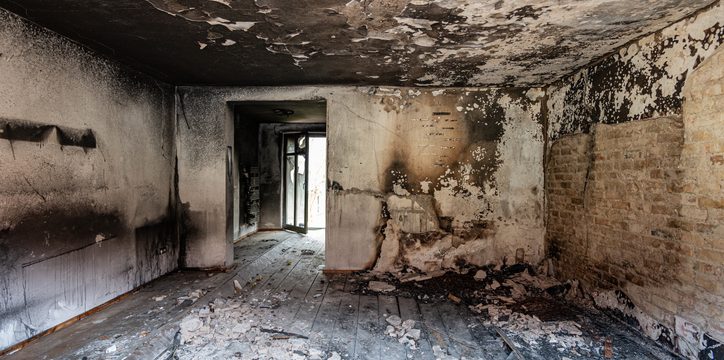
Extinguishing a fire is only the first phase in protecting a commercial property. Once the fire service departs, a silent wave of secondary destruction begins behind the scenes.
Secondary fire damage is the indirect harm and ongoing material degradation caused by acidic soot, smoke corrosion, chemical residues, and firefighting water. Unlike primary fire damage, secondary damage can spread beyond the burn zone into other parts of the building. This delays post-fire clean-up, increasing the risk of rapid structural damage and higher restoration costs. The first 48 hours are critical due to:
- Corrosion of building materials: Acidic soot corrodes and discolours metal and surface finishes.
- Mould growth: Trapped firefighting water in subfloors and wall cavities can trigger rapid mould growth.
- Deep contamination: Smoke and volatile compounds penetrate porous materials such as brick and plasterboard, making extraction more difficult over time.
Rapid professional intervention during this critical window can reduce structural repair costs, prevent irreversible material degradation, and minimise costly business downtime. This article covers:
- The three major drivers of secondary fire damage.
- Specialised treatments for mitigating fire damage.
- Five technical pitfalls facility managers must avoid.
- A step-by-step action plan to mitigate secondary fire risks.
Summary of the drivers and impacts of secondary fire damage
| Primary driver | Root cause & mechanism | Structural & commercial asset risks | Critical window for mitigation |
|---|---|---|---|
| Acidic soot & surface corrosion | Burning synthetics (e.g. PVC cables) releases acidic gases such as hydrogen chloride. Highly hygroscopic soot draws in atmospheric moisture, forming corrosive electrolytic acid films. | Autocatalytic pitting corrosion on structural steel and copper; surface spalling and salt “sweating” on concrete; permanent binder staining in finishes. | 24–48 Hours (Before chemical etching and metal pitting become irreversible). |
| Deep-penetrating & lingering odours | Thermal expansion forces submicron carbon, SVOCs, and pyrolytic tars deep into porous substrates like timber, brick, and plasterboard. | Persistent off-gassing; temporary masking fails; acrid smoke smells resurface when heating or ambient humidity rises. | Immediate (Requires early extraction before VOCs polymerise inside pores). |
| Trapped moisture & rapid mould growth | Firefighting water collects in hidden structural voids (subfloors, plasterboard cavities) combined with retained thermal building heat. | Rapid fungal/mould infestation, structural timber rot, gypsum board breakdown, and hazardous biohazard expansion. | 24–48 Hours (Before active microbial colonies establish). |
Specialised treatments for mitigating fire damage
When commercial premises suffer fire damage, standard commercial cleaning methods are inadequate. Restoring a facility quickly and safely requires technical, industrial-grade restoration protocols designed to stop secondary damage in its tracks.
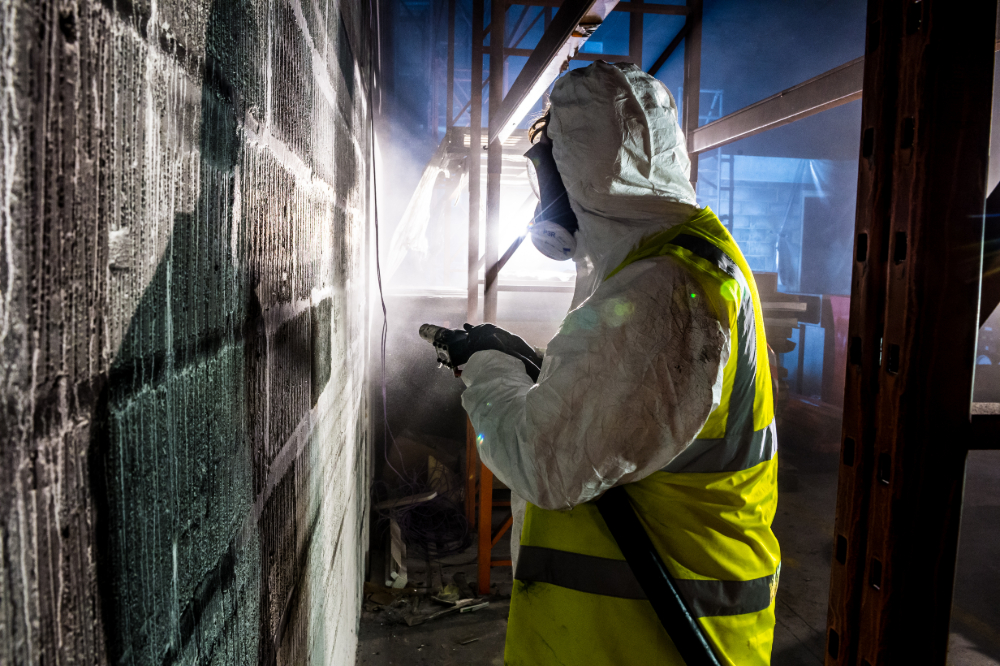
Eco-blasting for removing soot
Eco-blasting is an advanced cleaning process that uses solid carbon dioxide (CO2) pellets propelled at high velocity to lift heavy soot deposits cleanly from structural timber framing, masonry and concrete without causing physical degradation.
Eco-blasting operates through three simultaneous physical mechanisms:
- Thermal shock: The extremely low temperature (-78.5°C) of the pellets rapidly cools the soot layer, causing it to contract, embrittle and fracture away from the warmer substrate beneath.
- Kinetic fracture: High-speed impact physically removes the tars and carbon from the surfaces.
- Sublimation expansion: Upon impact, the pellets sublimate into a gas, expanding approximately 800-fold in volume. This micro-explosive expansion lifts fractured soot particulates out of deep pores and wood grain without creating secondary waste slurry or grit runoff.
Peel-off latex cleaning for delicate and porous surfaces
Internal architectural features, such as historic brickwork, carved decorative plaster, interior stone and unglazed tiles, require a gentle, non-abrasive approach. Using liquid washing solutions on these porous materials risks forcing dissolved acidic salts and liquid soot deeper into the material.
Technicians apply a waterborne, film-forming latex emulsion, combined with chelating agents, evenly across the soiled surface.
- Capillary extraction: As the paste dries over a 24 to 48-hour period, water evaporates outward, creating an internal capillary draw. This process pulls dissolved acid salts, heavy metals and submicron soot particles out from the substrate’s microscopic pores into the curing latex sheet.
- Clean detachment: Once fully dried, the flexible latex film is peeled away by hand, completely removing the bound contaminants without using pressure, secondary liquid water or abrasive media.
Ozone treatment for breaking down odour molecules
Pyrolytic tars and semi-volatile organic compounds (SVOCs) from the fire penetrate deep into porous plasterboard, timber and masonry, creating persistent odour reservoirs that periodically off-gas, potentially leaving staff and clients exposed to hazardous compounds. Surface wiping or aerosol air fresheners only temporarily mask these acrid smells.
High-capacity ozone treatment penetrates deep into the same wall cavities, ceiling voids and porous structural materials that act as odour reservoirs. When ozone comes into contact with the trapped smoke compounds, it breaks down the complex organic molecules into inert, odourless substances. This effectively removes persistent odours rather than just masking them.
Industrial drying and mould removal
Low-Grain Refrigerant (LGR) dehumidifiers and high-static air movers are used to circulate high volumes of dry air through concealed cavities, such as under raised floors and inside unvented walls.
These are used together with broad-spectrum antimicrobials to prevent spore germination and remediate active mould growth, ensuring the building meets indoor air quality standards.
Surface sealing and barrier encapsulation
After mechanical and chemical cleaning, porous structural elements, such as timber roof trusses, floor joists, concrete foundations and block walls, may still hold micro-reservoirs of VOCs deep within their structure. If left unsealed, these residual compounds can bleed through fresh paint finishes or slowly off-gas odours whenever temperature and humidity rise.
Barrier surface primers can permanently seal in these remaining contaminants:
- Shellac-based primers: These dry quickly and create a strong seal that blocks smoke odours and stops stains from bleeding through.
- Alkyd-based primers: Durable coatings ideal for sealing porous materials such as concrete and structural timber.
- Water-based sealing coatings: Protective coatings used for large areas such as wooden roof trusses or concrete basements. Once the surface is dry, they form a seal that prevents odours from escaping and keeps indoor air clean.
| Specialised treatment | Primary target contaminant/ risk | Operating mechanism | Commercial & restoration benefit |
|---|---|---|---|
| Eco-blasting | Sticky soot, char, and acidic tars on structural timber, concrete, and masonry. | High-velocity CO2 pellets trigger thermal shock, kinetic fracture and rapid 800-fold expansion upon sublimation. | Lifts soot cleanly out from deep surface pores without abrasive damage, water saturation or secondary grit waste. |
| Peel-off latex cleaning | Soot, carbon dust and acid salts on delicate interior brick, plaster, stone and terracotta. | Film-forming latex emulsion creates capillary pull during drying, locking soot into the matrix before it is peeled away. | Waterless, non-abrasive extraction that preserves architectural features without driving liquids into the core. |
| Ozone treatment | Embedded acrid odours, VOCs, and pyrolytic tars trapped in porous materials. | Gaseous ozone saturates inaccessible voids, oxidising smoke molecules. | Permanently eliminates lingering smoke odours by breaking down the molecules. |
| Industrial drying & mould disinfection | Trapped firefighting water in subfloors and plasterboard cavities creates a high relative humidity risk. | Heavy-duty Low-Grain Refrigerant (LGR) dehumidifiers and air movers paired with broad-spectrum antimicrobials. | Rapidly extracts deep structural moisture, halts mould germination within the 24–48-hour window, and prevents structural rot. |
| Surface sealing & encapsulation | Residual VOCs, pyrolytic tars, and micro-odour reservoirs in cleaned structural wood and concrete. | Application of low-permeability shellac, alkyd, or elastomeric barrier primers over cleaned substrates. | Permanently locks in microscopic odour compounds and prevents stain bleed-through into topcoats or interior air. |
5 technical pitfalls facility managers must avoid
While the advanced treatments described above are highly effective, executing them out of sequence or making preliminary errors could lead to irreversible damage. Navigating the aftermath of a commercial fire requires avoiding several subtle technical traps that can transform manageable damage into catastrophic structural loss. There are five major operational pitfalls to consider during the initial assessment and recovery phase.
1. Premature wet cleaning and breaking the “dry-before-wet” rule
Applying liquid detergents, soapy water, or wet wipes to dry, friable soot before dry extraction is one of the most common and costly mistakes made by untrained personnel. Soot particles resting on dry surfaces are initially held by weak dispersion forces. Introducing moisture causes rapid capillary imbibition, drawing suspended submicron carbon particles deep into the open pores of concrete, brickwork and timber.
Once trapped within the substrate’s cellular matrix, the soot cannot be extracted by surface washing, permanently staining the material. Standard restoration protocols dictate that dry mechanical extraction, specifically HEPA vacuuming with standoff brush nozzles and vulcanised rubber sponges, must be completed to remove unbonded particulates before any liquid chemical wash is introduced.
2. HVAC ductwork contamination and thermophoresis traps
During a fire, hot combustion aerosols are forced down steep thermal gradients towards cooler building surfaces (a phenomenon known as thermophoresis). Cold metallic HVAC ductwork, ceiling voids, uninsulated wall cavities, and service risers act as magnetic traps for acidic soot particulates.
Restarting a building’s HVAC system after a fire without first isolating, inspecting and decontaminating the ductwork will disperse toxic soot particles, VOCs, and acid condensates through clean, unimpacted operational zones. This can contaminate areas of the property not affected by the fire and significantly increase decontamination costs and downtime.
3. Invisible corrosion of critical electrical and IT assets
Acidic soot deposited on electrical switchgear, server racks, copper busbars and circuit boards contains corrosive chemicals from burnt cabling and synthetic materials. When combined with normal humidity, these deposits react with moisture, causing continuous corrosion beneath the soot. This degrades copper connections, damages insulation and disrupts electrical conductivity.
Without immediate specialist decontamination, machinery and IT infrastructure that appear unharmed immediately after the fire will suffer unexpected short circuits, intermittent logic errors and failure weeks after the site has reopened.
4. Misidentifying protein fire residues
Fires that start in commercial kitchens, canteens or food processing facilities leave behind protein-based grease and residues rather than soot. As these residues react with air, they form sticky, yellowish films that quickly harden and bond tightly to surfaces.
These films are almost transparent, making them difficult to see, but they emit a lasting foul odour. Regular cleaning products or grease removers can smear them on surfaces, trapping the smell. To safely break down and remove these films, specialised enzyme-based treatments are needed, as they digest tough grease without harming the underlying paint or finishes.
5. Overlooking replacement thresholds for building materials
Building standards such as ANSI/IICRC S700 require certain fire-damaged building components to be removed and replaced because they cannot be repaired:
- Gypsum plasterboard: When exposed to sustained temperatures above 80°C, the gypsum core calcines, losing its chemically bound water molecules. This results in core shrinkage, micro-cracking, and a complete loss of structural shear strength and certified fire-resistance performance.
- Water-saturated panel cores: Plasterboard saturated by firefighting water absorbs acidic materials that cannot be removed, posing a risk of mould.
- Charred timber framing: Structural lumber members in which char depth exceeds engineering load margins must be reinforced, consolidated with structural epoxy, or removed rather than simply cleaned and encapsulated.
Step-by-step action plan to mitigate secondary fire risks
To protect your commercial property from escalating damage and financial loss, act immediately after the flames are extinguished. Based on professional fire restoration standards, here is a critical operational roadmap facility managers should follow to stabilise the site and halt secondary degradation.
Step 1: Emergency release & site safety clearance
- Fire service handover: Confirm the fire service has officially released the premises and declared it safe to re-enter.
- Hazard assessment: Identify immediate physical risks to personnel, specifically structural weaknesses, standing water, and compromised electrical wiring.
Step 2: Immediate environmental control & HVAC isolation
- Isolate climate systems: Turn off and seal all HVAC air intakes and ductwork immediately. Failing to do this allows forced air to circulate toxic submicron soot particles and acid gases into unimpacted zones of the building, vastly expanding the cleanup scope.
- Control ambient humidity: Keep humidity levels below 70%. This prevents moisture from mixing with acidic soot residues, which helps prevent rust and metal damage to your equipment and structure.
Step 3: Rapid water extraction and moisture containment
- Locate concealed water traps: Firefighting water collects in hidden structural voids, including subfloors, beneath heavy equipment and inside wall cavities.
- Deploy industrial extraction: Because post-fire heat and trapped moisture create prime conditions for rapid mould growth within 24 to 48 hours, you must deploy heavy-duty water extraction immediately. High-performance Low-Grain Refrigerant (LGR) dehumidifiers will extract deep moisture from the building fabric and halt microbial spore germination.
Step 4: Engage certified specialists for forensic damage triage
- Identify residue chemistry: Bring in specialist restoration teams immediately. They will categorise the contamination type, whether it’s dry carbon, sticky synthetic tars or polymerised protein films, so they can select the correct chemical intervention.
- Establish restore-versus-replace thresholds: Employ RSPH-accredited experts to assess your building. They will identify materials for immediate removal rather than cleaning that have suffered core structural degradation, such as calcined gypsum plasterboard or severely charred load-bearing timber.
Step 5: Carry out the correct sequence of decontamination and odour removal
- Enforce the “dry-before-wet” rule: Start restoration with dry mechanical cleaning, using HEPA vacuum cleaners and rubber sponges to remove loose soot particles before applying liquid treatments.
- Deploy advanced mechanical extraction: Apply specialist methods such as Eco-blasting to safely remove stubborn soot, or peel-off latex poultices to clean delicate interior stonework and plaster.
- Target persistent odours: Deploy high-capacity ozone treatment to remove odour-causing chemicals in the smoke residues that penetrate deep into building materials.
Step 6: Barrier encapsulation & certified clearance testing
- Seal structural substrates: Seal sound architectural materials such as timber structures and concrete with barrier coatings to permanently lock in any remaining microscopic odour reservoirs and prevent stain bleed-through.
- Final environmental clearance: The remediation programme concludes with rigorous clearance testing by RSPH-qualified experts to ensure the building environment is completely safe for contractors and staff to return, allowing your commercial operations to resume.
Act quickly to protect your commercial property
Extinguishing a fire is only the first step in protecting a commercial property. As acidic soot, corrosive gases, and trapped firefighting water continue to react within building materials, delaying clean-up will compound structural damage and increase restoration costs. Taking decisive action within the critical 24–48-hour window will minimise long-term repair costs, preserve valuable physical assets, and reduce operational downtime for your business.
When disaster strikes, you need an experienced, certified restoration partner who can respond immediately. Rentokil Specialist Hygiene provides 24/7 emergency post-fire cleanup services across the UK. Our team of RSPH-certified specialists delivers end-to-end commercial remediation — from rapid water extraction and high-grade mould prevention to specialised Eco-blasting soot decontamination and molecular ozone deodorisation.
If your commercial site has been affected by a fire, do not leave your property’s structural integrity to chance or rely on surface-level cleaning methods that fail to stop secondary damage.
FAQs
Secondary fire damage is the indirect harm caused to a property after a fire has been extinguished. It is driven by acidic soot, corrosive smoke residues, volatile chemical compounds and firefighting water that remain in the building structure.
The initial 24 to 48 hours represent a crucial window because acidic soot quickly begins corroding metal fixtures and electrical components, trapped moisture promotes rapid mould growth, and smoke odours penetrate deeper into porous materials, leading to significantly higher restoration costs if unaddressed.
The primary drivers are acidic soot deposits that cause corrosion, deep-penetrating odour compounds that adsorb into substrates, and trapped firefighting water that creates ideal conditions for mould infestation and structural rot.
Specialists use advanced methods such as Eco-blasting to remove soot without surface damage, peel-off latex poultices for porous surfaces, thermal or ozone treatments to break down lingering odours, and industrial dehumidification paired with antimicrobials to extract moisture and prevent mould growth.
No, standard wet cleaning or household detergent can smear acidic soot and drive contaminants deeper into porous materials like concrete, brick and plasterboard. Professional dry extraction methods must be performed first to safely remove surface particulates before applying liquid cleaners.