


What is Kitchen Deep Cleaning?
Kitchen deep cleaning is the process of making sure every part of the kitchen is tackled, in order to maintain a healthy environment for the preparation and presentation of food by removing hidden contaminants, cleaning and sanitising. This differs from your regular routine kitchen cleaning which will include daily tasks such as wiping down food preparation areas, sanitising work surfaces, washing cooking utensils and emptying bins.
During a kitchen deep cleaning service, every area of the kitchen where visible dirt, hidden contaminants, and unwelcome elements such as grease or carbon could accumulate are dealt with efficiently. All surfaces should be covered, including walls and ceilings, alongside hard-to-reach areas such as under and behind equipment like ovens, fryers and refrigerators.
Cleaning extractor hoods and ventilation systems, degreasing and decarbonising cooking equipment are also an important part of the process as the build-up of grease poses a significant fire risk.
Why is Regular Deep Cleaning Crucial for Food Safety Compliance?
Without effective deep cleaning, a kitchen is at risk from the cross contamination of food as well as encouraging infestations of pests. In addition to this, grease build-up is left unchecked in extraction systems due to poor kitchen extraction cleaning, this can lead to a higher risk of fires, turning the kitchen into a potentially unsafe working environment.For your kitchen to be up to commercial kitchen hygiene standards for inspections and audits, it is vital to be compliant with the relevant hygiene standards and regulations, such as the Food Safety Act 1990.

Your Questions Answered
What is the difference between deep cleaning and sanitising?
Sanitising involves using chemicals to directly target the germs in an area, in order to lower them to a safe level. This is usually done in areas that are used for food handling and preparation.
Deep cleaning is a much larger operation, targeting the whole kitchen instead of specific areas. All parts are scrubbed with an appropriate cleaning agent and water, to get rid of any accumulation of grease and grime. The sanitising of food preparation areas is usually included within a deep clean.
Is kitchen deep cleaning a legal requirement?
No, there is no law that specifically enforces kitchen deep cleans. But, while a full “deep clean” isn’t explicitly mandated by UK law, maintaining high standards of hygiene in commercial kitchens is a legal requirement, and includes the regular cleaning and sanitation of all areas, equipment, and ventilation systems.
Also, in order to ensure food hygiene inspection readiness, and ensure that a kitchen meets food hygiene regulations and standards, kitchen deep cleaning is necessary. Without proper cleaning protocols in place, a business could gain a poor reputation, and face an increased chance of closure.
How often should a commercial kitchen be deep cleaned in the UK?
Even though it is not a set legal requirement, ideally a commercial kitchen should be cleaned at least once every six months. This will ensure that it is up to standard for inspections by meeting legal kitchen hygiene regulations, and the business will be more likely to retain customers if they have good hygiene standards throughout their establishment.
What does commercial kitchen deep cleaning include?
In order to deliver a high quality kitchen deep clean a full risk and site assessment should be undertaken so that the clean can be tailored to that specific site. Once this has taken place, trained cleaning operatives will use food-safe degreasers and certified processes to deliver a deep clean that meets UK regulation standards.
Once a deep clean has been completed a full report and audit documentation should be completed.
What regulations apply to kitchen hygiene in the UK?
When running a kitchen it is important to adhere to key UK kitchen hygiene regulations, including the Food Standards Agency (FSA)SA Standards, which is underpinned by legislation such as the Food Safety Act 1990, and Food Standards Act 1999. This states that a business must not add, remove, or treat food in a way that would damage those eating it, as well as making sure that food is up to expected customer quality standards.
How do I prepare for a food hygiene inspection – what are EHOs looking for?
Food hygiene inspections are undertaken by authorised food safety officers or most commonly EHOs (Environmental Health Officers). They will be looking to answer three major questions when inspecting your kitchen:
- How hygienically is food being handled?
- How do you ensure that food is handled safely?
- Is the kitchen kept in a safe and clean physical condition?
You can help ensure your kitchen is up to standard by engaging in HACCP kitchen cleaning, which involves identifying hazards to be removed or reduced, and identifying critical control points to monitor and set limits on.
In order to be up to standard for an EHO inspection, a kitchen must be thoroughly cleaned, tools must be well maintained, and food should be stored safely.
What common kitchen hygiene failures trigger warnings or closures?
Common hygiene failures in commercial kitchens include improper food storage such as not keeping hot food hot enough or refrigerators at the correct temperature, inadequate handwashing facilities and/or practices, cross contamination risks, and pest infestations. Issues such as these can lead to foodborne illnesses, reputational damage, and even legal repercussions or closure of the establishment.
Safety hazards which regulators will focus on can be split into three categories.
- Chemical – such as food being exposed to cleaning products
- Microbiological – which can often stem from poor food storage
- Physical – this includes foreign objects in food, but can also refer to an unsafe physical environment, such as electrical or fall hazards
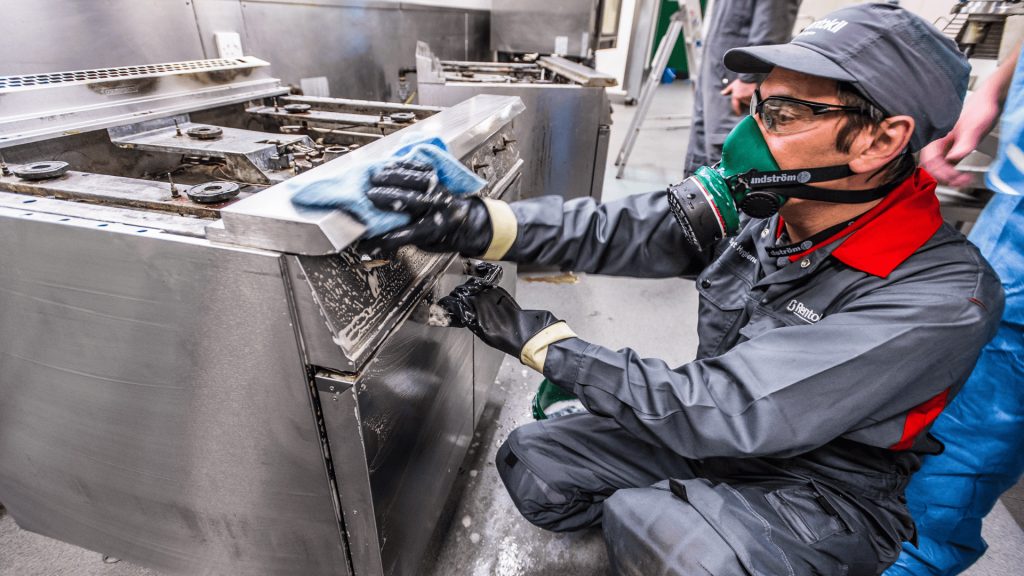
What to Expect From a Professional Kitchen Deep Clean by Rentokil Specialist Hygiene
Rentokil Specialist Hygiene go above and beyond, providing a full, individual kitchen assessment, and a bespoke cleaning plan tailored to your needs. We focus on those easy to miss areas such as extraction systems, ductwork, and high and low-level areas, through disruption-free scheduling (overnight and off-hours) allowing your kitchen to run uninterrupted. We then provide service validation through ATP swabbing and evidence of compliance to prepare the business for any regulations and inspections.