


Common locations for discarded needles
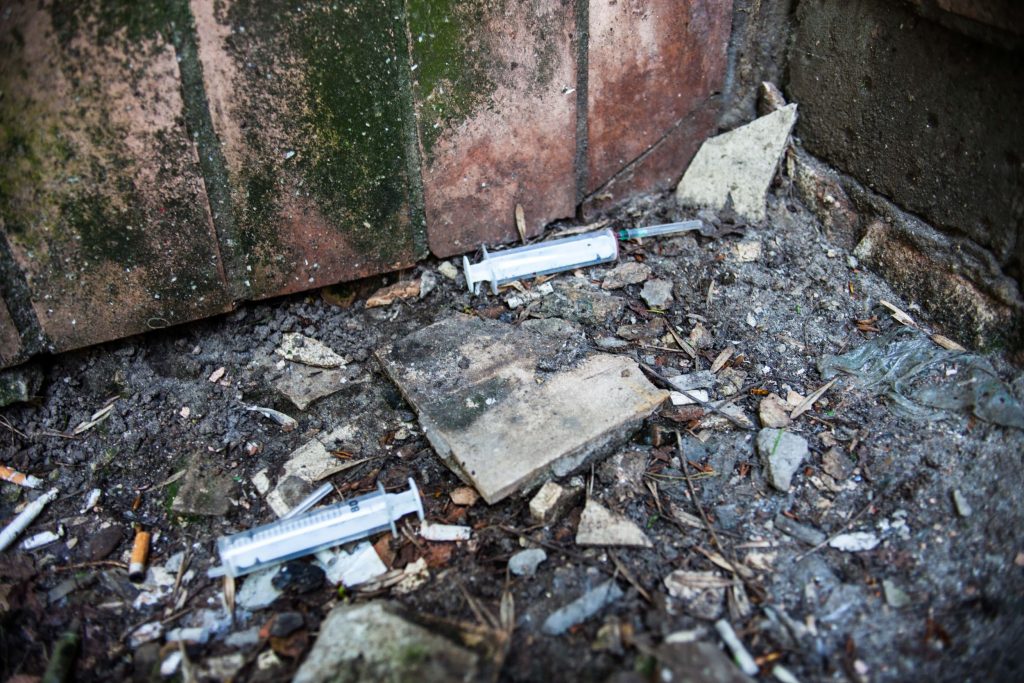
Stereotypical locations such as alleys and underpasses are not the only ones that can be blighted by discarded needles and drug paraphernalia. Public spaces, such as car parks, public toilets and even residential streets can also suffer from this type of littering along with indoor locations such as abandoned buildings, drug dens and industrial units.
Pretty much anywhere which is not overly busy and is concealed from public view, could be at risk from drug litter. Alongside the fear its discovery can leave within the wider community it also presents a health risk to the public and those employed to clear it up.
The dangers of used needles
The primary risk posed by used needles is that of a sharps (also known as a needlestick) injury, which refers to a wound that punctures the skin from a sharp object such as a needle. These injuries cause physical discomfort alongside significant stress and anxiety as such an injury can transmit bloodborne viruses (BBVs), such as Hepatitis B, Hepatitis C, and HIV.
The extent of the problem in the UK
Across the UK, studies have found that this problem is a serious concern in many urban areas, with a report in Southampton showing that 7,037 discarded needles were found in the city in just one year. A recent UK drug misuse report also highlights the extent of the problem with 8.8% of 16-59 year olds reporting using drugs in the past year (which equates to 2.9 million individuals).
These reports show just how widespread the issue is and how vital it is to have expert cleanup services in place to help protect the public from needlestick injuries or cross contamination from discarded drug paraphernalia. In order to address the concerning problem of drug use and the waste it causes, many communities are actively taking steps to combat this. One such example is a recent initiative in Glasgow that saw the opening of the first Safer Drug Consumption Facility in the UK earlier this year. This facility aims to combat drug-related deaths by providing a safe, supervised and clean area for drug consumption, access to treatment and support, and to reduce the negative impact public injecting has on local communities and businesses.
The impact of the improper disposal of drug paraphernalia
As well as being a hazard to members of the public who might inadvertently come into contact with them, discarded needles and drug litter can also be harmful to wildlife who might accidentally ingest or suffer injuries from them. Needles left on the ground can easily be washed into storm drains during rainy weather and may eventually reach rivers, lakes and oceans. This can lead to water contamination through residue drugs or pharmaceuticals entering the waterstream.
What to do if you find discard needles or other drugs paraphernalia
Firstly it is important not to handle needles or other drug litter yourself as it could be infected, and there is a risk that you could injure yourself. No attempts should be made to dispose of needles without the correct equipment and PPE in place to contain and handle biohazards.
If needles and drug litter is appearing regularly, then you should contact your local authority, as well as the police in order to report the ongoing issue, so it can be addressed safely.
Why is professional removal and cleaning recommended?
To make sure drug and needle waste is properly removed, a professional cleaning service is required. Sharps are classified as hazardous waste, especially when contaminated with infectious materials or hazardous medicines, and they must be disposed of carefully and in an approved method. Businesses also have an ethical and legal responsibility to protect their employees and the public from risk posed by needlestick injuries.
Professional sharps removal technicians from Rentokil Specialist Hygiene are equipped with the correct PPE and specialist equipment to remove and dispose of drug paraphernalia safely and legally. At Rentokil Specialist Hygiene we offer a bespoke, discreet, and safe solution. Our comprehensive needle sweep service covers everything from the safe pickup and disposal of drug paraphernalia, to a full decontamination and remediation of the affected area.