

(Reading time 10 minutes)
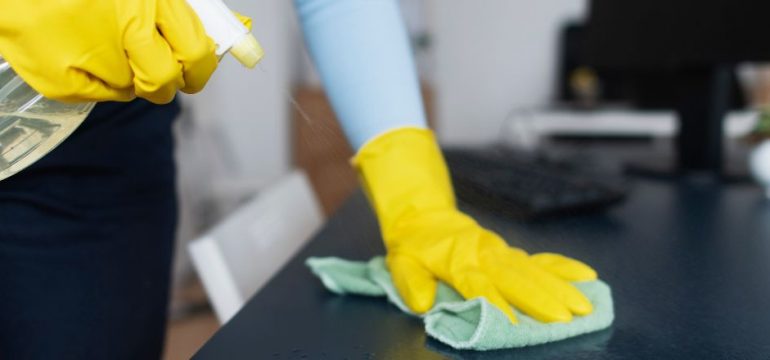
Every day in commercial facilities, many employees perform the familiar “spray and wipe” ritual on shared workspaces. While this practice looks and smells clean, from a biological standpoint, the surface is often no safer than if it had been ignored entirely.
This ubiquitous habit fundamentally fails the laws of chemistry by bypassing the single most critical variable in pathogen eradication: contact time (or dwell time). To eliminate viruses and bacteria, disinfectants need to remain in continuous contact and visibly wet on a surface for a specific duration, often between 3 and 10 minutes. Wiping the chemical away prematurely does not achieve a partial clean; instead, it creates a sub-lethal exposure that fuels cross-contamination and microbial resistance.
For business leaders, workplace hygiene is a priority for operational risk management. Rushed sanitation protocols create a false sense of security, which can increase employee absenteeism through illness and impact productivity. This article explains the difference between visual cleanliness and disinfection, decodes the science of chemical dwell times and establishes a simple, practical protocol to genuinely protect your facility against biological threats.
- The risks of rushed disinfection
- What does contact time mean?
- Decoding the claims in the fine print
- Different types of cleaning spray
- A quick guide to effective disinfection
The risks of rushed disinfection
The common “spray and wipe” ritual creates a dangerous gap between visual neatness and biological safety. Prioritising speed over the required chemical contact time of the spray undermines health and operational continuity through several key risks:
- Pathogen relocation: Instead of killing microbes, immediate wiping transfers live bacteria and viruses to the cloth, transforming it into a vehicle for cross-contamination across shared surfaces.
- Microbial resistance: Sub-lethal chemical exposure kills only the weakest pathogens, leaving resilient strains to replicate and breed localised “superbugs” that are immune to standard cleaners.
- False security: Visual cleanliness creates “hygiene theatre”, leading employees to lower their personal defences and engage in high-risk habits, ultimately increasing infections and absenteeism.
What does contact time mean?
On the back of any commercial disinfectant bottle, in the tiny text on the product label, you will find a number hidden in the instructions, usually ranging from 30 seconds to 10 minutes. This is the contact time, frequently referred to in facilities management as “dwell time”.
It is the duration a chemical solution must remain visibly and actively wet on a surface to neutralise the specific pathogens listed on its label. If a label requires a five-minute dwell time and the surface dries or is wiped clean at minute three, the chemical process it is designed to carry out is cut short.
The science of germ killing
To understand why the contact time is important, you have to look at how these chemicals interact with microbes. Disinfectants do not destroy them on contact; they are designed to dismantle the biological structures over a specified period.
- Enveloped viruses (e.g. influenza, SARS-CoV-2): These viral particles are surrounded by a protective lipid (fatty) membrane. The active ingredients in a disinfectant work similarly to a heavy-duty dish soap, slowly binding to and dissolving this oily outer layer. The chemical requires a sustained window of wetness to breach this shield before it can reach and destroy the viral RNA inside.
- Bacteria (e.g. E. coli, Salmonella): Bacteria are structurally different and often more resilient, protected by rigid, interlocking cell walls. Disinfectants must chemically penetrate these cellular barriers to disrupt the metabolic processes inside, ultimately causing the cell to rupture and collapse.
This molecular demolition takes time. A cellular or viral particle wall cannot be effectively breached in the two seconds it takes to pass a cloth across a desk.
Decoding the claims in the fine print
The disconnect between the perception of disinfection and chemical reality often starts with product labels. The bold claim “Kills 99.9% of bacteria and viruses” is a highly conditional laboratory metric, legally effective only if the microscopic instructions under “directions for use” are followed. Specifically, the surface must remain continuously wet for anywhere from 3 to 10 minutes (the contact time). If a facility’s routine involves spraying and wiping after only 10 seconds, the manufacturer’s instructions are not executed, rendering the 99.9% protection claim legally null and void.
The critical distinction between sanitising and disinfecting
While often used interchangeably, sanitising and disinfecting are distinct legal and scientific standards. Understanding this difference is vital for adequate safety protocols and procurement:
| Attribute | Sanitising | Disinfecting |
|---|---|---|
| Primary target | Bacteria only (reduces count to safe levels). | Bacteria, viruses and fungi. |
| Required time | Fast-acting (usually 30 to 60 seconds). | Slow-acting (usually 3 to 10 minutes). |
| Best workplace use | Food-contact surfaces (break rooms, cafeterias). | High-touch surfaces (doorknobs, restrooms, shared desks). |
| Efficacy standard | Lowers microbial load by 99.999% in commercial settings. | Destroys or irreversibly inactivates 100% of specified pathogens. |
Purchasing a product that only sanitises to mitigate a viral outbreak is a critical mistake, and treating a disinfectant like a sanitiser by wiping it away prematurely fails to achieve either standard of clean.
Different types of cleaning spray
When selecting surface sprays for a workplace, understanding the chemical backbone of your cleaning arsenal is key. Different solutions serve different operational purposes. Some are only designed to lift dirt, while others neutralise biological threats.
Here is a brief overview of the most common solutions used in commercial and household surface sprays, categorised by their active ingredients and business utility.
1.Surfactant-based solutions (all-purpose cleaners)
- What they are: Soap, detergents, and water-based mixtures.
- How they work: Surfactants lower the surface tension of water, allowing it to trap, lift and emulsify oil, grease, and dirt so they can be physically wiped away.
- Operational use: Excellent for cleaning, not good for killing germs. These are your frontline defence for removing visible grime, fingerprints and coffee spills from desks. They do not kill viruses or bacteria; they relocate them to the cloth and the rinse water.
2. Quaternary ammonium compounds (“quats”)
- What they are: The most common active ingredient in standard commercial disinfectant sprays and wipes (look for ingredients ending in “-ammonium chloride”).
- How they work: They disrupt the cell walls of bacteria and the outer membranes of viruses, causing them to leak and die.
- Operational use: The office workhorse. They are relatively safe for most hard surfaces (like laminate desks and plastic chairs), odourless and highly effective against a broad spectrum of pathogens.
- The catch: They generally require a 3-10-minute dwell time to be fully effective.
3. Alcohol-based solutions (isopropanol or ethanol)
- What they are: Sprays containing 60% to 90% isopropyl or ethyl alcohol.
- How they work: Alcohol rapidly denatures proteins, essentially melting the protective outer layer of viruses and bacteria.
- Operational use: The tech-safe choice. Because alcohol evaporates quickly and leaves no residue, it is ideal for high-touch electronics, shared keyboards, and touchscreens.
- The catch: Because it evaporates so quickly, you often have to spray heavily or repeatedly to keep the surface wet long enough to meet the required contact time. Also, avoid high-concentration alcohol solutions because they evaporate too quickly to meet required dwell times and can cause bacteria to form a protective shell. 70% alcohol is the more effective standard as water acts as a necessary catalyst for disinfection, helping the alcohol to penetrate the cell wall.
4. Oxidisers (hydrogen peroxide and sodium hypochlorite)
- What they are: Hydrogen peroxide-based sprays or traditional chlorine bleach solutions.
- How they work: They release oxygen or chlorine radicals that violently oxidise and destroy the cellular components of pathogens.
- Operational use: The heavy hitters. Accelerated hydrogen peroxide (AHP) is becoming more popular because it breaks down into harmless water and oxygen, making it eco-friendly. Bleach is highly effective but reserved for deep cleans (like washrooms or medical bays).
- The catch: Bleach can corrode metals, ruin carpets and emit harsh fumes that irritate employees. Hydrogen peroxide is gentler but can still bleach certain fabrics over time.
5. Botanical / bio-based solutions (thymol)
- What they are: Disinfectants derived from natural essential oils, most commonly thymol (derived from thyme oil).
- How they work: Plant-based antimicrobials that degrade cell membranes, much like synthetic chemicals.
- Operational use: The “green office” darling. Perfect for companies pushing for ESG (Environmental, Social and Governance) goals or catering to employees with chemical sensitivities.
- The catch: They often have a distinct, strong herbal scent that can polarise an office and they sometimes require longer dwell times (up to 10 minutes) compared to accelerated chemical alternatives.
A summary sheet of chemicals used in cleaning sprays
| Solution Type | Primary goal | Best for | Main drawback |
| Surfactants | Visual cleanliness | Greasy breakroom counters, dust | Doesn’t kill germs |
| Quats | Daily disinfection | Desks, door handles, conference tables | Long dwell time required |
| Alcohol | Rapid sanitization | Keyboards, phones, shared electronics | Evaporates too quickly on large areas |
| Oxidizers | Deep bio-hazard clean | Washrooms, illness outbreaks | Can damage surfaces/fabrics |
| Botanicals | Eco-Friendly Disinfection | Green-certified workplaces | Strong scent, slower action |
A quick guide to effective disinfection
To ensure a workplace is genuinely protected, follow these steps.
Step 1: The mandatory pre-clean
Physically remove all organic materials, including dust, grease and food spills, using soap, water and friction. Surfaces must be visibly clean before chemical application.
Step 2: Read the label
Review the manufacturer’s instructions on the label on the back of the bottle to determine the exact contact time required for the specific pathogens you are targeting.
Step 3: Saturate and wait for the contact time
Apply the product thoroughly so the surface remains completely and visibly wet for the entire required contact time. If the surface dries prematurely, reapply the solution.
Step 4: Air dry or wipe with a clean cloth
Allow the surface to air dry completely whenever possible. If immediate turnover is required, wait until the full contact time has elapsed before wiping the surface with a fresh, clean microfiber cloth or a disposable towel.
Protect your facility
Cleaning surfaces with “spray and wipe” creates a costly illusion of cleanliness by failing to achieve the required contact time for disinfectants. This rushed approach actively generates bio-risk, fueling microbial resistance and cross contamination across shared surfaces, ultimately driving up employee absenteeism and impacting productivity. True disinfection requires a meticulous, four-step protocol: pre-cleaning, reading the product label, saturating the surface for the full dwell time, and allowing it to air dry.
To move beyond the risks of surface-level cleaning and achieve verified, high-level sanitisation, a professional approach is essential. Protect your facility, enhance your brand image, and reduce the risk of cross contamination by addressing the root causes of biological threats.
FAQs
A: It fails to meet the required contact time (or dwell time) that disinfectants need to remain visibly wet on a surface to eliminate pathogens, often leading to cross contamination and microbial resistance.
A: Contact time is the specific duration (usually 3 to 10 minutes) a chemical solution must remain continuously, visibly wet on a surface to neutralise the viruses and bacteria listed on its label. Wiping it away prematurely cuts short the disinfection process.
A: Sanitising primarily targets bacteria and requires a fast-acting time (30-60 seconds) to reduce the microbial count to safe levels. Disinfecting targets bacteria, viruses and fungi, is slower-acting (3-10 minutes) and destroys or irreversibly inactivates 100% of specified pathogens.
A: The key risks include pathogen relocation (transferring live microbes to the cloth), microbial resistance (creating localised “superbugs”) and false security (leading employees to lower their defences).
A: The protocol is: 1) The mandatory pre-clean (remove all visible organic materials), 2) Read the label (determine exact contact time), 3) Saturate and wait (keep the surface visibly wet for the full contact time), and 4) Air dry or wipe (use a clean cloth only after the full dwell time has elapsed).