


What are the biological hazards of a dirty protest?
When human waste is weaponised in dirty protests in prisons and police custody suites, the environment shifts from a custodial space to a high-risk biohazard zone. The danger is not just aesthetic: it is microscopic, persistent and potentially life-changing for those responsible for managing the site.
People in prisons and police cells are a high-risk group for drug or alcohol dependence, poor mental health, such as antisocial personality disorder, and higher rates of infectious diseases such as hepatitis B and C.
In exploring the biological hazards of a dirty protest, this blog covers:
- Pathogens found in human excrement and bodily fluids
- The “aerosolisation” hazard of human waste
- The risk from biofilms
- The direct risks to staff of “potting” and needlesticks
- Implications for the management of prisons and police custody suites
Related articles address what a dirty protest is and why people do it. and the recommended procedures and equipment for decontamination.
Pathogens found in human excrement and bodily fluids
Human excrement and bodily fluids are vectors for many infectious diseases. In a dirty protest, the risk is amplified because the waste is often “worked” into surfaces, and the microorganisms within it can form protective layers, increasing the likelihood of pathogen survival even after cleaning.
Enteric pathogens (faecal-oral route)
Faeces are the primary vector in a dirty protest and carry the highest organic load.
- Bacteria: E. coli, Salmonella and Shigella can cause severe gastrointestinal distress, dehydration and, in vulnerable individuals, sepsis.
- Viruses: Norovirus is a significant threat in prisons; it is highly contagious and spreads on surfaces and through the air. It requires a very low infectious dose and can survive on people, hard surfaces and food for up to two weeks if not treated with suitable disinfectants.
- Parasites: Cryptosporidium and hookworm larvae can remain viable in moist, organic matter, posing a risk through accidental ingestion or skin contact.
Bloodborne viruses (BBVs)
If the dirty protest involves blood, from self-harm or intentional “smearing” of menstrual fluid or wounds, it risks the spread of several viral diseases. Blood can also be present in faeces. Prisons, especially, are “breeding grounds” for bloodborne viruses.
- Hepatitis: There is a risk of both hepatitis B and hepatitis C. Hepatitis B is particularly resilient; it can survive in dried blood for up to seven days while remaining infectious.
- HIV: While less resilient than hepatitis, it remains a critical concern during the initial clean-up phase.
Urine
While less hazardous than faeces due to its lower microbial count, urine can carry a wide range of bacteria, fungi and viruses.
- Microorganisms: E. coli and Candida species are common causes of urinary tract infections (UTIs), and in rare cases, urine can transmit Leptospira bacteria. Leptospira poses a higher risk in prisons and police cells with rat infestations, which are more likely in older, poorly maintained buildings.
- Chemical irritation: Bacteria can break down urea into ammonia, creating a potent respiratory irritant that can exacerbate underlying conditions such as asthma.
Vomit
Vomit is a major source of aerosolisation risks in a dirty protest.
- Projectile transmission: The act of vomiting atomises gastric contents, sending ultrafine particles into the airflow of the cell.
- Viral load: It is a primary transmission route for norovirus, where even a tiny amount of inhaled matter can trigger infection.
Spit and mucus
Though smaller in volume, these fluids are effective vectors for respiratory illnesses.
- Tuberculosis (TB): In the UK prison estate, the risk of TB transmission through mucus from coughing or spit is also a concern for frontline staff.
- Influenza and Coronavirus: These are easily spread through mucosal contact or when spit dries and becomes airborne.
Summary of dirty protest biohazard risk by fluid type
| Hazard | Primary pathogens or hazard | Transmission risk |
| Faeces | E. coli, Norovirus, Salmonella | High: Ingestion via cross contamination or inhalation of dried, ultrafine particles. |
| Urine | Leptospira (rare), and ammonia build-up from bacterial action | Moderate: Skin contact or respiratory irritation from the breakdown of urea. |
| Blood | Hepatitis B, Hepatitis C, HIV | Critical: Mucosal contact or needlestick injuries from hidden sharps. |
| Vomit | Norovirus, Gastrointestinal bacteria | High: Aerosolisation and inhalation of atomised particles. |
| Spit and mucus | Tuberculosis (TB), Coronavirus, influenza | High: Direct mucosal contact or inhalation of airborne droplets. |
The “aerosolisation” hazard of human waste
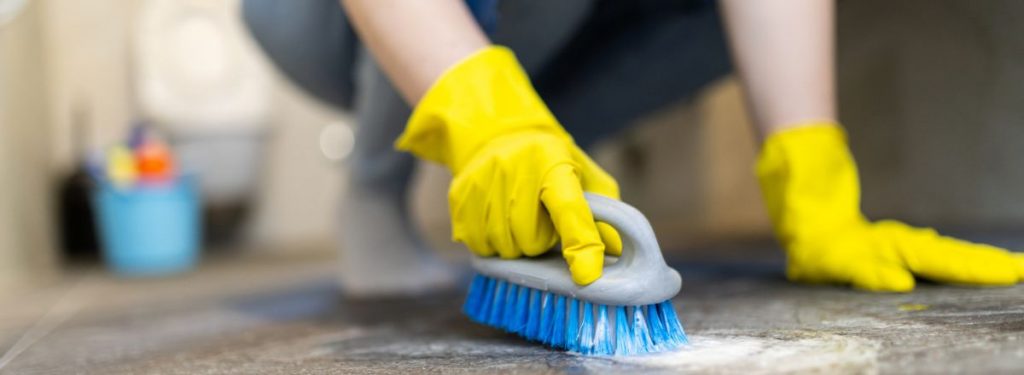
In a custodial setting, a dirty protest is often viewed as a surface-level hygiene issue. However, the most significant risk to staff is often airborne. This occurs when biological agents move from a solid or liquid state on a surface into microscopic particles suspended in the air.
For professionals in the UK prison and police sectors, understanding the physics of these bio-aerosols is critical for effective risk assessment and Safe Systems of Work (SSOW) required by the Health and Safety at Work Act.
1. What is aerosolisation?
Aerosolisation refers to the creation of a “bio-cloud” — a suspension of fine solid particles or liquid droplets containing pathogens. These are categorised by size:
- Large droplets (>10μm): These follow a ballistic trajectory and typically settle within 1–2 metres of the source.
- Aerosol particles (<5μm): These are light enough to remain buoyant. They do not settle quickly and can be carried by internal air currents throughout the cell and into the ventilation ducting or through an open doorway.
- Droplet nuclei: As moisture evaporates from a smear on a wall, the remaining “core” of the pathogen becomes a microscopic solid that can remain airborne for hours.
2. Mechanisms of aerosol generation
Pathogens are forced into the air through five primary custodial scenarios:
- The “toilet plume”: Every time a contaminated toilet is flushed, the energy of the water atomises faecal matter and launches a plume of aerosols into the air.
- Desiccation (drying): As dirty protest material dries, the waste becomes “friable”. Simple movements by the detainee or a draft from an open door can flick these dried, infectious “dust” particles into the breathing zone.
- Mechanical disturbance during cleaning: The act of scrubbing a cell during cleaning — particularly with stiff brushes or high-pressure sprayers — is the most dangerous phase for staff. It aggressively aerosolises the waste, so specialist cleaning and sanitising techniques should be used.
- Heat and humidity: Warm, humid cells (common in older prison wings) accelerate the release of volatile organic compounds (VOCs) and moisture-bound bacteria into the air.
- Respiratory action: Although not related to a dirty protest, the same physics of aerosols applies to the spread of respiratory diseases such as influenza and Covid, from coughing, sneezing, spitting and even talking. Airflow through a person’s respiratory system — lungs, throat, nose and mouth — creates droplets ranging from the submicron size up to large visible blobs.
3. How far and where can aerosols reach?
The “hazard zone” of a dirty protest extends well beyond the smear area.
- Distance: The smallest bio-aerosols can travel several metres, through doorways and vents, to contaminate the immediate landing or corridor.
- Respiratory entry: Particles smaller than 5μm bypass the body’s upper defences (nose/throat) and travel deep into the alveoli of the lungs, providing a direct route for pathogens such as M. tuberculosis or norovirus.
- Mucosal contact: Larger droplets land on the conjunctiva (eyes) or the inner lining of the mouth, which is common in hepatitis B transmission.
4. Air dynamics and the “chimney effect”
The air ventilation system (HVAC) in a police custody suite or prison wing is a double-edged sword.
- Positive pressure: If the cell is under positive pressure, opening the door “pushes” the bio-cloud directly into the breathing zone of those entering.
- Duct contamination: Particles carrying pathogens can be drawn into extraction grilles. If the filters are poorly maintained, these particles can settle in the ductwork, creating a reservoir of infection that can be recirculated if the system reverses or fails.
5. Prevention and protection from biohazards
Standard cleaning methods are insufficient for bio-remediation of aerosols. Specialised methods are needed [add link to article on cleaning protocols] to prevent particle spread and aerosol generation, and to protect the operator. This includes methods such as:
- A zoning system and strict decontamination procedures to maintain a clean-to-dirty workflow.
- ULV fogging to neutralise airborne viruses before entry.
- Low-energy cleaning techniques, such as saturated bio-wipes, to minimise aerosol generation.
- Wearing FFP3 respirators. Failure to provide adequate respiratory protection violates COSHH regulations, making fit-testing mandatory for staff.
More details are given in our article on cleaning protocols for dirty protests.
The risk from biofilms
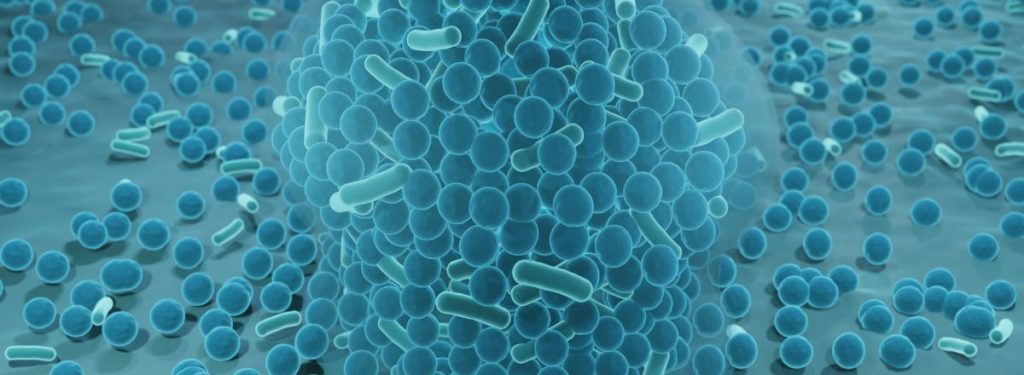
The most persistent hazard resulting from human waste and fluids in custodial settings is the formation of biofilms. These are hard to spot and difficult to eliminate.
What is a biofilm?
A biofilm is a complex, sticky community of microorganisms — such as bacteria, fungi and viruses — that attaches strongly to surfaces. These organisms secrete a protective, slimy matrix known as extracellular polymeric substances (EPS). This matrix acts as a biological shield, anchoring the colony to the surface and protecting the microorganisms from everyday cleaning agents.
How biofilms form during a dirty protest
The nature of a dirty protest creates the ideal environment for biofilm growth.
- Organic priming: The presence of faeces, urine and bloodborne pathogens provides the rich organic “soil” necessary for bacteria to attach to cell surfaces.
- Surface adhesion: Microorganisms quickly colonise non-porous surfaces like stainless steel toilets, but they also penetrate deep into porous materials such as grout and anti-condensation coatings.
- Rapid maturation: In the warm, humid environment of a secure cell, a biofilm can begin to establish itself within hours of the initial fouling.
The specific hazards of biofilms in custodial settings
Biofilms present a significant long-term risk to the wellbeing of staff and detainees.
- Pathogen reservoirs: Biofilms can harbour dangerous pathogens such as E. coli, Norovirus and Salmonella. The protective matrix allows these microorganisms to survive for much longer than they would on a clean surface.
- Resistance to disinfection: Because the matrix is often airtight and chemically resistant, standard handwash or low-level disinfectants cannot penetrate the shield. This means a surface may look clean but remain biologically contaminated.
- Telltale odours: Biofilms are often responsible for the persistent, “built-in” smell of ammonia and waste that lingers in a cell even after a basic clean-up.
- Aerosolisation risk: When a biofilm is disturbed, such as by mechanical scrubbing or the airflow from a ventilation system, it can release ultrafine particles into the air, increasing the risk of respiratory infection for anyone on the premises.
Preventing and breaking down biofilms
Standard cleaning routines are effective against everyday dust, but they cannot remove an established biofilm. This requires specialised techniques and materials [add link to article on cleaning protocols], for example:
- Enzymatic breakdown: Specialist cleaning involves agents designed to break down the protein-rich matrix of the biofilm.
- High-level disinfection: Only industry-leading, antimicrobial treatments can penetrate the colony once the matrix has been weakened.
Verification: Relying on visual inspections alone is insufficient. High-profile facilities should use ATP testing or heat maps to identify hidden biological build-up in nooks and crannies. Heat maps use the different thermal properties of biofilms and surfaces to locate them.
The direct risks to staff of “potting” and needlesticks
Faeces and urine are often used as a weapon in dirty protests, by throwing them at prison staff, known in the prison service as “potting”. Faeces can also be used to conceal small objects.
- Mucosal entry: If human waste enters the eyes, nose, or mouth, viruses and bacteria can quickly infect sensitive tissue.
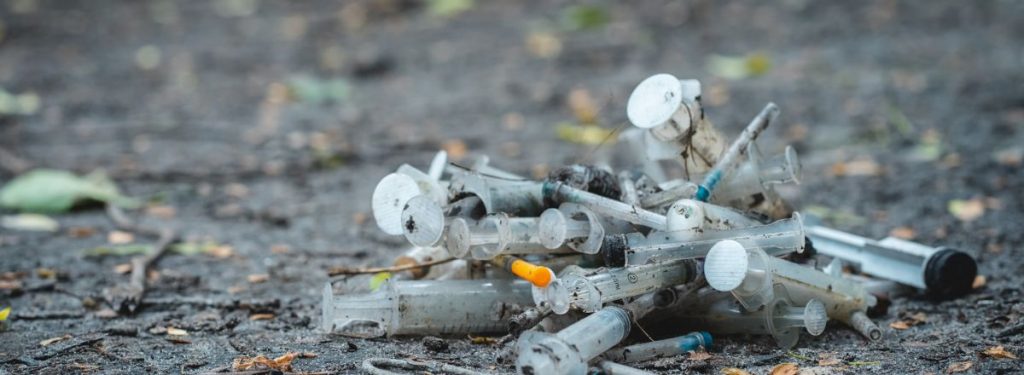
Hidden sharps: In custody suites, detainees may hide needles or “plugs” (drug packages) within the waste. A staff member attempting a “quick clean” without puncture-resistant gloves faces the dual threat of chemical toxicity from the drugs and infection from the needle if they suffer a needlestick injury.
Implications for the management of prisons and police custody suites
requiring a thorough assessment of risk by responsible managers. The danger posed by highly resilient pathogens, including bloodborne viruses (Hepatitis B and C) and enteric pathogens (Norovirus), extends far beyond direct contact with visible contamination. Aerosols and persistent biofilms that resist standard disinfection expand the scope of specialist measures required.
Standard cleaning routines are insufficient for complete bio-remediation. Management, therefore, must implement mandatory specialised Safe Systems of Work (SSOW) to ensure compliance with the Health and Safety at Work Act.Read more details on how to remove biohazards and restore facilities to safe use in our article on cleaning protocols for dirty protests.