

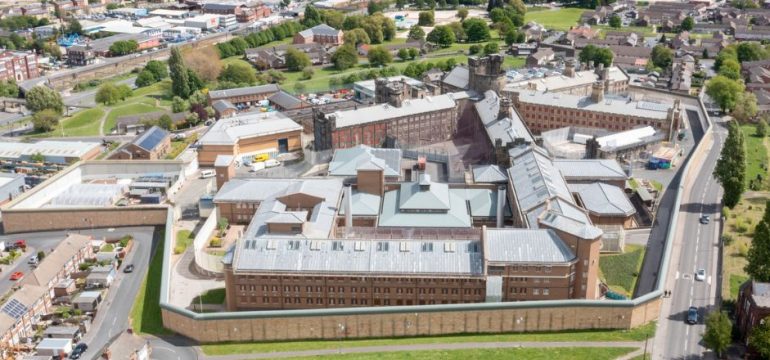
What is a dirty protest, and why do people do it?
Prison staff and police officers managing detainees in custodial suites face challenging tasks, but they also encounter an often-overlooked hazard: the dirty protest.
A “dirty protest” is the term used when an individual deliberately defecates or urinates without using the provided toilet facilities. Very often, this will be a detainee or prisoner. In this form of protest, they may deposit or smear bodily waste or fluids across the interior of the room or cell they are being held in, covering walls, floors, ceilings, observation windows, key holes or ventilation grilles.
While the term suggests a single act of defiance, the motivations and operational impact vary significantly between, for example, a prison environment and a police custody suite. Whether it is a calculated act of rebellion, a sign of mental health issues, or substance misuse, deliberately fouling a space with human waste creates an operational emergency that requires more than routine cleaning — even for minor incidents.
Similar events can occur in public spaces and other sectors outside of the prison and custody service, but usually for different reasons.This blog aims to introduce causes and explain the importance of using specialist services to restore a holding space or cell to operational status. Subsequent articles will address the biological hazards and the recommended procedures and equipment for decontamination.
The biological reality: what is involved in a dirty protest?
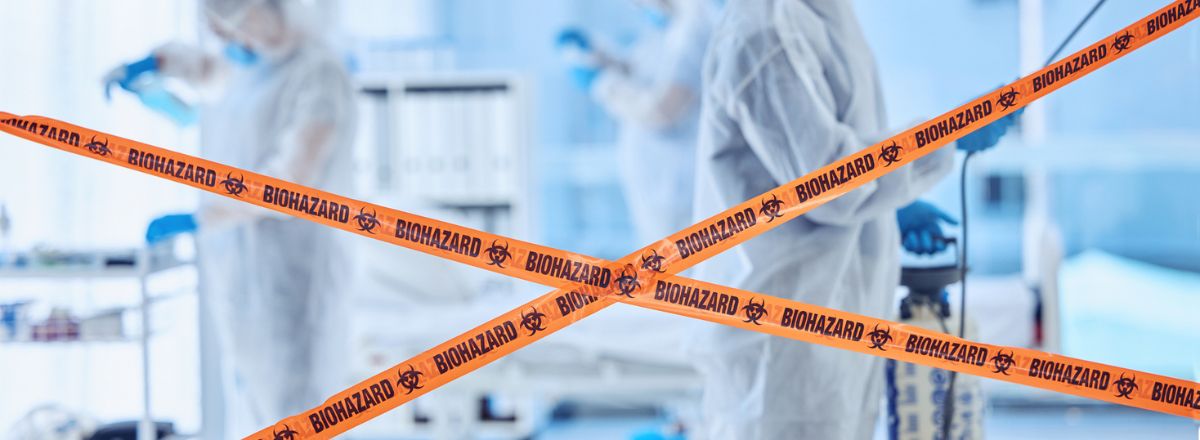
A dirty protest is not merely an act of defiance; it is the creation of a severe biohazard. The environment can become contaminated with a cocktail of organic matter, including:
- Faeces and urine: The primary components, carrying risks of E. coli, hepatitis and various parasites.
- Vomit: Often present if the protester is also on a hunger strike or suffering from substance withdrawal.
- Blood and saliva: Frequently introduced through self-harm or aggression, increasing the risk of potential bloodborne pathogens like HIV or hepatitis.
The prison population and those in police custody have a higher rate of diseases such as HIV and hepatitis C than the general population because of higher rates of drug misuse and risky behaviour in and out of prison.
The different motivations in prisons and custody suites
The root causes of these incidents are critical for management to understand, as they dictate the level of risk and the required response.
1. In prisons
Historically, the dirty protest (also known as the ‘no-wash’ protest) is a form of industrial action or political defiance. High-profile examples, such as those involving Bobby Sands during the 1981 Irish hunger strikes, used the biological reality of human waste to force authorities into negotiations over prisoner status and conditions. In the modern prison estate, it is often a long-term tactic used by individuals in segregation to protest against a specific regime or a perceived lack of rights.
2. In custody suites
Incidents are more frequent in police custody than in the general prison population, but for very different reasons. In this fast-paced environment, the act, more often termed “smearing”, is rarely political. Instead, it is typically a reflection of the higher risks of mental health issues and substance misuse:
- Acute mental health crisis: A regressive response to the stress of detention or a manifestation of psychosis. This can be caused by:
- Sensory overload: The confined, sterile, and often loud environment of a cell can trigger a breakdown in those with pre-existing conditions like schizophrenia or bipolar disorder.
- Regressive behaviour: In a state of extreme trauma or mental collapse, an individual may regress to primitive behaviours as a way of expressing a loss of control over their environment.
- Self-harm vs. protest: In these cases, the waste is not a weapon used against the state, but a reflection of a mind that has temporarily lost the ability to process social norms and hygiene.
- Substance misuse: Often triggered by “induced psychosis” from synthetic cannabinoids (such as ‘spice’) or alcohol withdrawal.
- Drug-induced psychosis: Synthetic cannabinoids or high-strength stimulants can cause “excited delirium”, where the detainee becomes completely detached from reality, often resulting in violent or erratic fouling of the cell.
- Alcohol withdrawal: Severe withdrawal (delirium tremens) can cause hallucinations and a total loss of bowel or bladder control, which the person may then spread around the cell while in a state of confusion.
- “Packing” and internal concealment: Occasionally, a detainee may foul a cell in an attempt to retrieve or hide “plugs” (drugs concealed internally), creating a high-risk biohazard involving both waste and potent narcotics.
- Tactical disruption: A detainee may use waste to:
- Attempt to delay a police interview.
- Force a cell move.
- Create a physical buffer between the detainee and the officers.
Why do prison and police cells require specialist hygiene services?
One of the most significant challenges in managing a dirty protest is the environment itself. Whether it’s a high-security prison wing or a busy urban custody suite, these are secure perimeters. Unlike a public office or a retail space, you cannot simply call a local cleaning franchise or a standard commercial “biohazard” team to resolve the issue.
The “security lock” on hygiene services
In a custodial setting, the environment is fundamentally designed to keep people in and unauthorised individuals and items out. This creates a specific set of operational barriers that standard cleaning services are simply not equipped to handle:
- Vetting and clearance: All personnel entering must have the appropriate security clearance (such as NPPV3 for police or CTC for prisons). A standard cleaning operative or company may lack the background checks required to step foot behind the “yellow line”, meaning responsibility often falls on untrained internal staff if a specialist cleaning partner isn’t already in place.
- Contraband control: Cleaning equipment such as scrapers, chemical bottles, long-handled mops and even the buckets themselves could be used as a weapon or “tools for escape” in the wrong hands. Every item brought into the secure zone must be logged, tracked and strictly controlled.
- The “cell-out-of-service” pressure: In a custody suite, every minute a cell is out of service due to a dirty protest, the operational pressure on the rest of the department increases. Standard services often operate on 24–48-hour lead times; in a secure environment, you need a response that understands the urgency of “bed watch” and detainee flow.
Why are standard cleaning procedures inadequate?
The physical architecture of a cell, with its anti-pick mastic, integrated drainage, and recessed lighting, is designed to be robust. However, there will be “nooks and crannies” where biological waste can be intentionally hidden, causing long-term odour and infection issues.
Standard cleaning equipment is designed for “visual” cleanliness, not the forensic-level decontamination hygiene required for security protocols, staff and inmate safety, and the structural integrity of a high security environment.
Because the environment is secure, the solution must be equally specialised. It requires a partner who speaks the language of the Custody Sergeant or the Duty Governor, understands the PACE (Police and Criminal Evidence Act) requirements for cell habitation, and can operate within the strict movement protocols of a locked-down facility.
Dirty incidents in public places
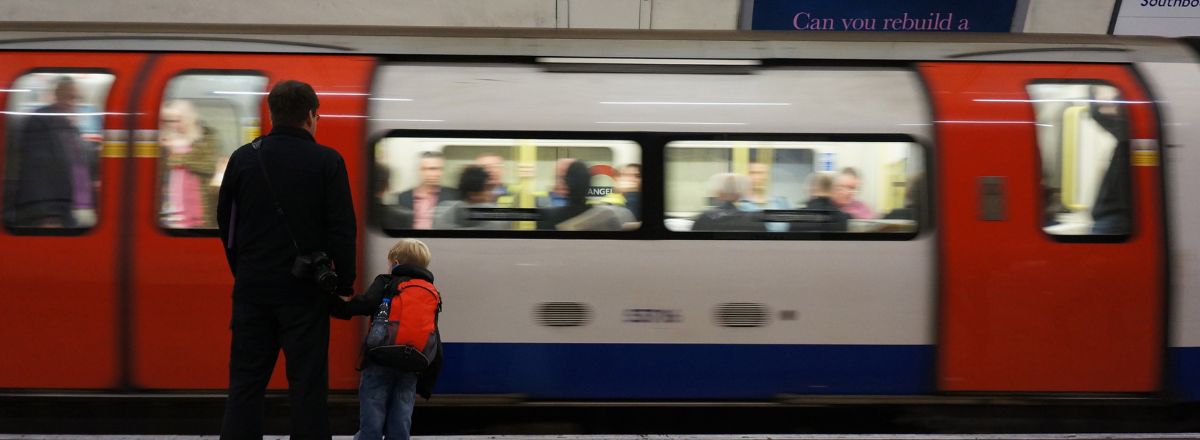
While custodial environments like prisons and police suites are the most frequent sites for these incidents, “environmental fouling” and “smearing” are significant risks for several other public-facing and high-stress business sectors.
In these industries, the act is rarely a “protest” in the political sense; rather, it is usually a result of anti-social behaviour, severe mental health episodes, homelessness or substance misuse. These alternative sectors can be classified into five categories.
1. Public transport and infrastructure
Transportation hubs are high-traffic areas where staff frequently encounter human waste.
- Trains and buses: Anti-social behaviour or passengers under the influence often lead to “soiling” incidents in carriages. Transport for London recorded over 1600 “soiled saloon” incidents from Jan 2022 to Sept 2024.
- Public elevators and underpasses: In urban centres, these areas are often used as makeshift toilets by the street-homeless population or individuals in a mental health crisis.
- Aviation: While rare, “air rage” incidents can escalate to passengers smearing waste in aircraft lavatories or on seating as an extreme form of disruption.
2. Healthcare and mental health facilities
Hospital staff, particularly in emergency departments (A&E) and psychiatric wards, regularly manage incidents of this kind.
- A&E waiting rooms: Patients waiting for long periods, often while intoxicated or in pain, may use bodily fluids as a weapon, a cry for attention or may not be fully aware of their actions.
- Secure mental health units: Similar to custody suites, patients in acute psychosis may engage in smearing as part of a regressive behavioural episode.
3. Retail and shopping centres
High-street retailers and large shopping centre operators face “dirty” incidents primarily in their public-facing facilities.
- Public washrooms: “Vandalism by fouling” is a common issue for shopping centre managers. This is often an act of pure anti-social defiance.
- Changing rooms: High-street fashion retailers occasionally encounter incidents in which their changing room cubicles are used as toilets, whether as a malicious act against the brand or staff, or due to a lack of nearby facilities.
4. Hospitality and night-time economy
Venues that serve alcohol are at a significantly higher risk.
- Nightclubs and bars: Drug or alcohol-induced “accidents” or deliberate fouling in washrooms are a nightly occurrence for many security and cleaning teams.
- Hotels: Unsupervised guests, particularly those using rooms for “party” purposes, can leave behind significant biological contamination on bedding and walls.
5. Education
- Special educational needs schools: In special educational needs and disabilities (SEND) settings, smearing due to “pica” (a medical term for when children eat non-edible items, which can include faeces) can be a challenge for staff to manage hygienically.
Universities: High-density student housing and late-night campus areas often experience fouling incidents linked to the night-time economy.
Key sector comparison of risks and responses
| Sector | Primary driver | Cleaning requirements |
| Public Transport / Hospitality | Anti-social / Intoxication | Rapid response to prevent service delay. |
| Healthcare | Mental Health / Clinical | Infection control to protect vulnerable patients. |
| Retail | Malicious Vandalism | Aesthetic restoration to protect brand image. |
| Education | Behavioural / Sensory | Gentle but medical-grade sanitation. |
The “hidden” liability for these sectors
Unlike the police or prison service, these businesses often rely on standard commercial cleaners who may not be vaccinated against Hepatitis B or trained in the specific health risks of human waste.If a retail or transport worker is asked to clean a “smear” without the correct PPE or training, the business is at high risk of a personal injury claim or a Health and Safety Executive (HSE) investigation.
The imperative for specialist cleaning
Whether driven by political defiance in a prison or acute distress in a public setting, a “dirty protest” or environmental fouling fundamentally creates a severe biohazard that demands forensic-level decontamination, and not just standard commercial cleaning services.
Custodial environments must employ specialist hygiene services capable of navigating strict security vetting and contraband control. Other sectors, including transport, healthcare and retail, often face a “hidden liability” by relying on general cleaners who may lack the appropriate training, PPE, and vaccinations, such as Hepatitis B.
Managers must recognise that this is a critical health and safety imperative, as failing to deploy appropriately cleared and trained experts exposes frontline staff to biological risks and places the organisation at risk of personal injury claims or Health and Safety Executive (HSE) investigations.By understanding the true operational severity and risks, affected sectors can ensure rapid facility restoration and, most importantly, protect the integrity of their workforce. To aid in this understanding, the next article will detail the full spectrum of biological hazards involved.
| To restore operational capacity immediately, protect your workforce from severe biohazards, and mitigate the risk of personal injury claims or HSE investigations, you need more than a standard cleaner. Contact Rentokil Specialist Hygiene today. Our forensically-trained experts possess the required security clearance and understanding of custodial protocols (PACE, NPPV3/CTC) to safely and rapidly decontaminate and return your secure cells to service. |