What it takes to be a biohazard cleaner: life on the frontline with Majed Ghouse
For Majed Ghouse, a 56-year-old from East London, a "perfect day" at work involves clearing litres of raw sewage from blocked drains. Leaving his job as a mechanic in 2007 to seek a new challenge, Majed visited a local job agency and spotted a vacancy for a biohazard cleaner at Rentokil Specialist Hygiene. Thinking he would only try it for about six months, he embraced the warning that the role would involve hard graft, picking up needles, and cleaning up blood and sewage.
"They told me I might see some dirty stuff, but I wanted to give it a go. I'm not afraid of hard graft.”
Fast forward nearly two decades, and Majed is still taking profound pride in his work, providing essential restoration while operating safely and with deep compassion.
Cleaning in challenging environments
The environments Majed tackles are diverse and incredibly demanding. His very first task on the job involved deep cleaning a flooded bathroom in a block of flats that was covered in "literal crap". He left feeling highly satisfied after making it bright and clean, thrilled that the customer was "over the moon".
Tackling extreme indoor environments
Since that first day, his work has expanded into far more extreme scenes. Majed has spent hours removing carpet and sanitising a hotel room where a killing had taken place, leaving blood everywhere, and cleaning the walls of a barn following a fatal gas bottle explosion.
"Once the job is done and I shut the door, I don't think about it any more. I focus on normal things, like what I'm going to eat. I can't keep thinking about what I've seen.”
He is frequently called into the justice system, visiting prisons to clean up after dirty protests when inmates smear faeces on cell walls. He says it is one of the most unpleasant jobs he has had to do, saying, "It takes a couple of hours, and I have to make everything safe and sanitary again."
He also regularly cleans police cells, which he says aren’t as bad as prison cells. Majed added: "One time someone with hepatitis B had been in a cell, so I had to fog and sanitise everything: the walls, bed, mattress and chair."
Outdoor and public restoration
His duties even extend outdoors. Majed has jet-washed train tracks, searched for body parts after tragic incidents on the railways, and cleaned road traffic collision sites so thoroughly that you wouldn't know an accident had occurred. He also handles extensive mould removal in residential flats, an issue he notes has increased over the past five years. "I've been in flats where you move furniture and find entire walls covered in thick black mould," he said.
Early-morning callouts have included hosing down buildings covered in red paint following political protests by groups such as Just Stop Oil and Palestine Action.
Coping with the emotional weight
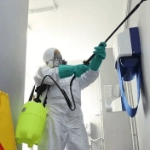
Dealing with trauma, hoarding properties, and death requires immense mental resilience. Majed has learned to protect himself both physically and mentally. He explains that wearing full protective gear, including a protective suit, gloves and a respirator mask, is absolutely crucial, noting that without the mask, the "smell of death" can stay with you for weeks.
Mentally, Majed has trained himself to switch off once a job is complete. "Once the job is done and I shut the door, I don't think about it any more," he says. He focuses on ordinary things, like what he will eat next, rather than dwelling on the grim realities, even when he has had to dispose of barrels of blood.
However, the emotional weight of the job is undeniable. He finds suicides to be the hardest jobs emotionally, particularly as these tragedies often increase around the Christmas season. He also regularly faces advanced decomposition, noting that he has attended scenes where people were left undiscovered for weeks, causing ceiling damage to the flats below them.
Bringing empathy to trauma cleaning
At the heart of Majed’s role is a deep commitment to the clients who are often navigating the worst moments of their lives. When entering a home where a loved one has died, he begins by disinfecting the area with a fogging system to reduce the smell, but his approach to the people involved is just as careful. He prioritises client care by breaking the ice, asking clients how they are, and gently inquiring about what they want removed from the scene.
Though he admits he gets emotional when he hears people's stories, Majed sets his own feelings aside to focus on providing the essential service they need. Travelling all over the UK in his fully equipped van, he continues to relish the variety of the work, declaring that no two days are the same.
Despite spending his days up to his waist in sewage or navigating traumatic scenes, his loved ones note that Majed maintains a spotless home himself. He takes immense pride in his work and has no plans to stop anytime soon.
For more information about Rentokil Specialist Hygiene services, visit: www.rentokil-hygiene.co.uk