How to keep your Organisation afloat following Flood Damage
Stormwater runoff and rivers bursting their banks affect thousands of homes and businesses each year. According to the Met Office, storm-related rainfall has intensified in recent years, with this October’s Storm Ciarán hitting the UK with three inches of rain and over 100mph winds. In Chesterfield this saw the river Hipper rise to its highest level, flooding local businesses, and causing immediate damage to stock and premises.
The potential health and safety risks following floods vary depending on the type of floodwater and business activity involved, so consider whether industrial chemicals may have leaked or whether contaminated stock can be effectively cleaned. Floodwater is likely to contain sewage and household waste, and can also contain industrial hazardous waste, so it’s important to practise caution when coming into contact with floodwater to avoid cross contamination.
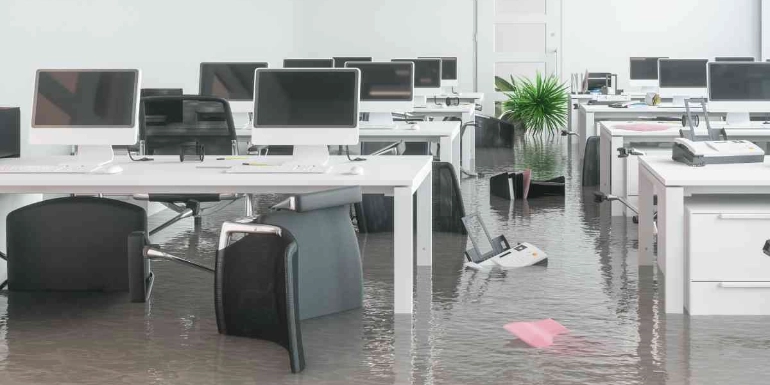
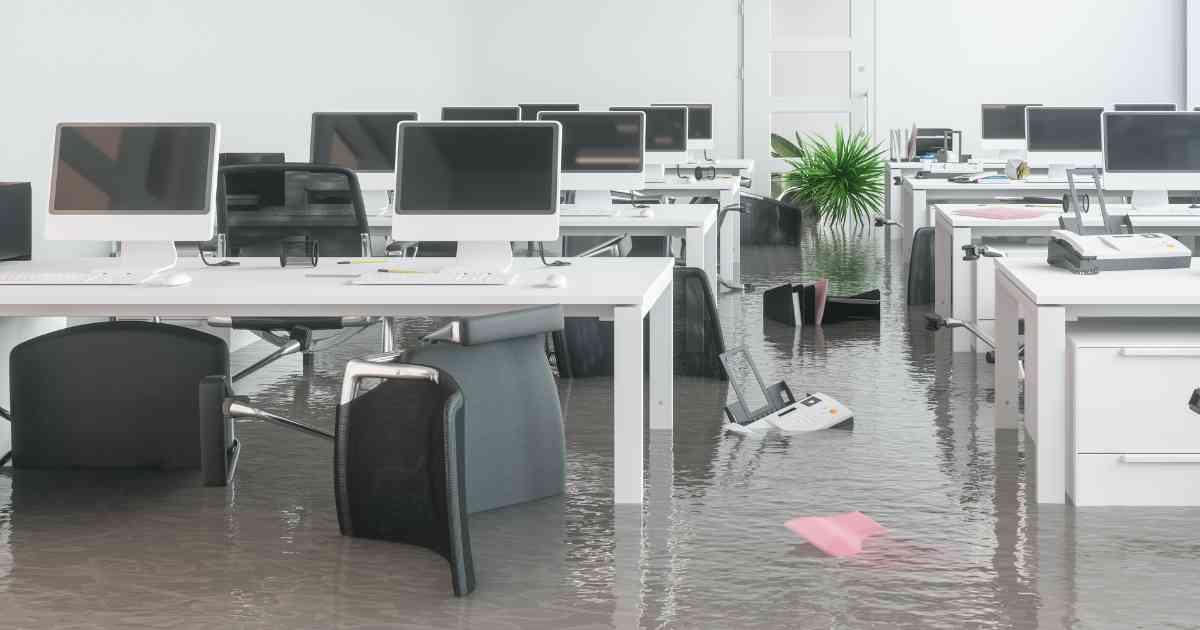 Flooded office space with computers and desks submerged in water.
Equally, while it is tempting to recover stock and goods, it is important to ensure these have not been contaminated. Floodwaters bring the risk of exposure to protozoa, viruses, bacteria, and fungi. Wearing protective clothing, including waterproof boots and gloves to prevent direct contact with floodwater is a must. After exposure, ensure thorough washing and sanitisation or disposal of protective gear to help minimise health risks.
If you or your team plan on entering the flooded property, then ensure that the power has been isolated. Equally, consider hazards such as the risk of drowning. While the water may only be knee high, manhole covers may have been uncovered, or flooring may have been weakened to the point of collapse, creating unseen pitfalls.
Your insurer is likely to be a crucial ally in securing the financial support necessary to restore your business, and it is worth remembering that the level of damage and potential long-term consequences of the flooding aren’t always obvious at first glance. Following a major flood, it may also take several days before assessors can reach you, a time when suppliers and customers could be chasing to understand whether you will be able to honour delivery timescales.
Aside from the immediate financial and logistical stress that comes with disruption to your business, the long-term impact on your business reputation can be hugely challenging.
If your premises have been hit by floodwater, there are several practical steps you can take to help get your business back up and running, while also keeping customers and colleagues safe.
Five key steps in floods damage recovery:
- Be Safe – don’t enter the property without switching off the electrical supply and assessing for drowning risks.
- Suit Up – floodwater is likely to be contaminated so always wear protective clothing.
- Plan Your Actions Carefully – i.e. shovelling mud away from only one side of a wall could leave it liable to collapse.
- Cleaning – it’s not just about removing the water, the premises will also need to be thoroughly disinfected.
- Drying Out – allow for drying time, which can take several weeks and even months.
Having clear and professional counsel from day one is crucial, allowing you to advise colleagues, clients, and suppliers on the implications of their dealings with your business. Having a clear plan, and securing professional advice, can help to make the task more manageable and help prevent your business from going under following a flood.
 Flooded building interior with murky water and debris seen through glass doors.
For professional flood damage clean up
In such situations, securing the support of an independently trained professional to swiftly assess the situation, and to ensure your team’s safety, can be a huge help. It can be tempting to wade straight into your premises to recover key documents and salvage goods, but professional counsel should be secured first to keep you and your team safe. If your premises are flooded, expert advice on the likely length of time it will take to restore your property to its original state, safely and hygienically, can be invaluable in determining your business recovery plans.