A complete guide to managing bodily fluid spills in care settings
In care settings, spills of blood, vomit, urine and faeces are common. Each incident requires a prompt and appropriate response to prevent the spread of filth and infectious material across surfaces and equipment and to protect residents, staff and visitors from exposure to potentially infectious microorganisms.
The risks depend on the type of bodily fluid and the level of exposure. Vomit and faeces may contain the more common gastrointestinal pathogens that can spread rapidly in care settings, including norovirus and Clostridioides difficile (C. diff). Blood can carry viruses such as hepatitis B, hepatitis C and HIV. Because these pathogens spread in different ways, the response should be tailored to the incident rather than relying on a single cleaning method.
Care providers must assess the risk of infection from bodily fluid spills and take steps to prevent, detect and control its spread in line with CQC regulations. They must also assess and control exposure to hazardous substances, including biological agents, under the Control of Substances Hazardous to Health (COSHH) Regulations.
A mop and bucket, along with standard multi-surface sprays, are not suitable equipment for preventing cross contamination and the spread of infections. Care teams need clear procedures, appropriate equipment and training to contain spillages rapidly, clean and disinfect spills safely, and recognise when specialist support is required. A systematic approach helps protect both the people receiving care and those responsible for providing it. This guide covers:
- Why bodily fluid spills present an infection risk.
- What should care teams do immediately after a spill?
- A seven-step bodily fluid cleaning protocol for care teams.
- Managing specific issues with spills.
- What to do if a member of staff is exposed and how to prevent cross contamination.
- Staff training, responsibilities and documentation.
Why bodily fluid spills present an infection risk
Blood, vomit, urine and faeces do not all present the same hazards. However, the absence of a known infection does not mean a spill is safe to handle without precautions. People may carry infectious microorganisms without showing symptoms.
Standard infection control precautions therefore apply whether infection is known to be present or not. The response should reflect the type of fluid, potential exposure, surface and task, not assumptions about the person concerned.
The table below shows the main considerations for each type of bodily fluid spill.
| Type of spill | Main considerations |
|---|---|
| Blood | May contain bloodborne viruses, including hepatitis B, hepatitis C and HIV. Exposure through sharps injuries, broken skin or splashes to the eyes or mouth requires prompt assessment. |
| Vomit | May contain gastrointestinal pathogens, including norovirus. Vomiting can disperse infectious particles and contaminate surfaces beyond the obvious spill. |
| Faeces | May contain gastrointestinal pathogens, including norovirus, Clostridioides difficile (also known as Clostridium difficile) and pathogenic E. coli. |
| Urine | Generally presents a lower infection risk than blood or faeces, but can contain pathogens and still requires safe removal. Chlorine-releasing products must not be applied directly to urine spills. |
| Wound exudate | May contain blood and pathogenic microorganisms. The presence of blood affects the procedure required. |
| Respiratory secretions | Can contaminate hands, equipment and nearby surfaces. Additional precautions may be necessary where respiratory infection is suspected. |
How pathogens differ in transmission route and environmental persistence
Different pathogens also spread in different ways. Gastrointestinal infections commonly spread when contaminated hands, food or objects transfer microorganisms to the mouth. Bloodborne viruses require a relevant route of exposure, such as sharps injuries, broken skin or splashes to the eyes or mouth; they are not spread through ordinary social contact.
Infectious microorganisms can persist on surfaces from hours to months after visible contamination is removed, depending on humidity, temperature, surface material and initial contamination level, for example:
- C. difficile produces hardy spores that can remain infectious for up to five months. They are resistant to standard cleaning methods and need specific cleaning protocols.
- Viruses from the respiratory tract generally persist for a few days (e.g. Coronavirus, influenza virus) and from blood for up to a week (HBV, HIV).
- Viruses from the gastrointestinal tract tend to last longer. Norovirus can remain infectious for up to seven days, and is resistant to standard disinfectants and alcohol-based hand sanitisers.
- Gram-positive bacteria such as Enterococcus spp. and Staphylococcus aureus (including MRSA) can survive on dry surfaces and fabrics for up to seven months.
- Gram-negative bacteria can remain viable from hours to months, e.g., E. coli (up to 16 months), Acinetobacter spp. (up to 5 months), Klebsiella spp. (up to 30 months), Pseudomonas aeruginosa (up to 16 months).
- Candida albicans, the most important nosocomial fungal pathogen, can survive for up to four months on surfaces.
What should care teams do immediately after a spill?
Before cleaning begins (following the seven-step protocol below), take time to establish what has happened and who may be at risk.
- Assess the incident. Identify the fluid, approximate volume, affected surfaces and any hazards such as broken glass or discarded sharps.
- Support the person involved. Address urgent care needs, preserve dignity and explain what is happening.
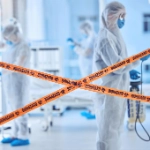
- Protect others. Keep residents, patients, visitors and unnecessary staff away. Use suitable signs or barriers without obstructing essential care or emergency access.
- Check for exposure. Ask whether anyone has been splashed, injured or contaminated through broken skin. Begin first aid immediately where needed.
- Notify the appropriate person. Follow local reporting arrangements, particularly for extensive contamination, suspected infectious illness or exposure incidents.
- Select the procedure and equipment. Confirm that the spill kit, PPE and cleaning products are suitable for the fluid and surface.
Do not begin cleaning until protective measures are in place. NHS England’s National Infection Prevention and Control Manual states that spills should be treated immediately by staff trained to do so safely, with responsibilities clearly defined. The Health and Safety Executive’s (HSE) guidance on incidental exposure provides advice on identifying risks and selecting appropriate controls.
How to choose the right PPE
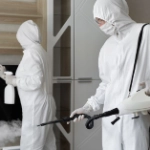
PPE reduces the wearer's exposure, but only when it is appropriate for the task and is removed without spreading contamination. For routine spill management, disposable non-sterile gloves and a disposable plastic apron are generally required. The UK Health Security Agency gives guidelines on suitable PPE for use in infection control in care settings. Depending on the risk assessment, additional protection may include:
- A fluid-resistant gown where an apron would not adequately protect clothing or skin.
- Eye protection and a fluid-resistant mask (e.g. type IIR fluid-resistant surgical masks), or suitable face protection (e.g. safety goggles or full-face visors), where splashes to the face are foreseeable.
- Suitable protective footwear for extensive floor contamination; additional footwear protection should follow the local risk assessment.
Cover cuts and grazes with waterproof dressings before starting. Check PPE for damage, use the correct size and follow the correct donning and doffing procedures.
Avoid touching clean supplies, phones, door handles or personal items with contaminated gloves. Change gloves between contaminated and clean tasks as required, and perform hand hygiene after removal. Remember that gloves are not a substitute for hand hygiene, as improper use can spread pathogens.
A seven-step bodily fluid cleaning protocol for care teams
This framework helps care teams organise their response, but it is not a universal sequence for chemical treatment: blood spills may need an initial disinfectant treatment before gross contamination is removed, while urine requires a different approach.
Follow the relevant pathway in your local policy and the spill product’s instructions. NHS England’s blood and body fluid spill management guidance distinguishes between fluid types and soft furnishings.
1. Prepare and secure the area
Restrict access to the area and gather all the materials and equipment required before starting: the appropriate spill kit, PPE, disposable absorbent materials, cleaning products and waste containers. Check product instructions, fluid dilution requirements, contact times and compatibility with the surfaces to be cleaned. Follow the chemical risk assessment guidelines and provide ventilation where required. If sharps or broken glass are present, do not pick them up by hand, even when wearing gloves. Trained staff should use suitable tools and the correct sharps container.
2. Put on appropriate PPE
Perform hand hygiene, cover broken skin and put on the protective equipment identified by the risk assessment. Consider how the task may change as cleaning progresses. Lifting contaminated materials or treating an awkward surface may introduce splash risks that were not immediately obvious.
3. Contain and treat the spill
Apply the absorbent materials, granules or spill pads specified for each type of incident to treat the spill. Work carefully to prevent splashing or spreading contamination. For blood and certain other higher-risk fluids, the approved procedure may require a chlorine-releasing product or equivalent treatment at this stage. Allow the specified contact time before removing the treated material. For urine, use a suitable product to absorb the spill or turn it into a gel. Never apply a chlorine-releasing agent directly to urine, because the reaction can release hazardous fumes. Some products simply contain or solidify liquid, so do not assume that every absorbent granule disinfects.
4. Remove contamination and clean the surface
Remove gross contamination using disposable materials, then place it directly into the designated waste container. Clean residual organic matter using the approved detergent or cleaning product. Work systematically from the less contaminated edges towards the more heavily contaminated area, using fresh materials as needed. Include edges, joints, furniture legs and other places where liquid may have travelled. Do not spread the spill across a wider area with a mop or reusable cloth.
5. Disinfect as required
Apply the disinfectant specified by the relevant spill or infection-control procedure. Ensure: It is effective against the microorganisms of concern. The concentration is correct. The surface is compatible with the product. The required contact time is achieved. Any subsequent rinsing or cleaning follows the instructions. For liquid disinfectants, the surface must remain wet for the specified contact time to be effective. A combined detergent-disinfectant may be suitable, but only for its approved application. Never mix cleaning chemicals or improvise a stronger solution.
6. Dispose of waste and decontaminate equipment
Place disposable cleaning materials into the appropriate waste stream in accordance with healthcare waste guidelines. Waste classification depends on the type of body fluid spill and the setting. Dispose of sharps separately. Clean and disinfect reusable equipment before returning it to storage, following the equipment manufacturer’s instructions.
7. Remove PPE, wash hands and reopen safely
Remove PPE using the trained sequence, avoiding contact between contaminated outer surfaces and skin or clothing. Dispose of it appropriately and perform hand hygiene. After managing vomit or faecal contamination, wash hands with liquid soap and water. Alcohol-based hand rub is not a reliable substitute against all gastrointestinal pathogens, particularly norovirus and C. difficile. Keep the area restricted until treatment is complete and it is safe to use, including allowing floors to dry. Record the incident where required and replenish the spill kit.
Why different spills need different cleaning protocols
Cleaning, disinfection and decontamination are related, but they are not interchangeable and may require specialist services.
- Cleaning removes dirt, organic matter and some microorganisms through physical action and a suitable cleaning agent.
- Disinfection uses an appropriate process or chemical to inactivate target microorganisms. Not all disinfectants are effective against bacterial spores.
- Decontamination is the overall process of making an item or environment safe to handle or use; for environmental spills, it commonly involves cleaning and disinfection.
Blood, faeces and other organic material can interfere with the performance of disinfectants. This is why gross contamination must be managed correctly rather than simply sprayed and left.
Blood spill protocols
Blood spill procedures need to address potential bloodborne pathogens and any sharps hazards.
For suitable hard surfaces, NHS England’s National Infection Prevention and Control Manual (NIPCM) describes initial treatment using chlorine-releasing granules or a specified chlorine solution, followed by further decontamination and cleaning. It also permits appropriate equivalent products under approved arrangements.
This should not be reduced to “use bleach on every spill”. The product, application sequence, concentration, contact time and surface all matter.
Vomit and faecal contamination
New-onset vomiting or diarrhoea should be regarded as potentially infectious unless there is good evidence otherwise. For suspected infectious diarrhoea or vomiting, UKHSA guidance advises immediate removal of contamination followed by an appropriate disinfection procedure. It specifies 1,000 parts per million chlorine where possible, and to use it according to the manufacturer’s instructions.
Where C. difficile is suspected or confirmed, use the locally approved sporicidal approach. A general antibacterial product is not automatically effective against spores. Cleaning the spill is also only one part of the response: staff must report symptoms and follow any additional care, monitoring and outbreak-control measures.
Urine spills
Remove urine promptly using suitable absorbent materials or a compatible gelling product, then follow the approved cleaning and disinfection procedure.
Do not apply chlorine-releasing agents directly to urine, including when blood is visible. Seek Infection Prevention and Control (IPC) advice if the appropriate pathway is unclear.
Other secretions and discharges
For wound exudate and respiratory secretions, assess whether blood is present, whether an infection is suspected and which surfaces have been exposed. Follow the appropriate procedure rather than treating every discharge the same way.
Choosing a suitable bodily fluid spill kit
A well-chosen spill kit puts the necessary materials and instructions in one place. Typical contents include:
- Disposable gloves and aprons.
- Absorbent pads, paper towels or suitable solidifying agents.
- Disposable cloths or collection tools.
- An appropriate cleaning or disinfecting product.
- Waste bags and clear instructions.
Check whether the kit is suitable for blood, urine, vomit and faeces, and whether it is intended for hard surfaces or soft furnishings. A kit designed for a small bathroom incident may not be sufficient for extensive contamination in a communal room.
Staff should know where kits are located and how to use them before an incident occurs. Inspect stock regularly, replace used components and check expiry dates.
Accessibility must also be balanced with safe storage. Polymer gels used in spill kits must be kept secure and away from patients because ingestion can cause serious harm.
Managing spills on carpets, upholstery and mattresses
Soft furnishings essential in care environments are made of porous materials that can complicate decontamination. A fluid may soak beneath the visible surface into carpet backing, upholstery padding or mattress interiors. Surface wiping alone may not reach that contamination. Some disinfectants can also damage or discolour fabrics.
After containing the incident:
- Check the material’s cleaning and disinfection instructions.
- Establish whether contamination has penetrated below the surface.
- Seek IPC advice on an effective, material-compatible treatment.
- Consider specialist extraction or steam cleaning where appropriate.
- Remove from use any item that cannot be safely decontaminated.
HSE’s decontamination guidance discusses detergent cleaning followed by steam cleaning for contaminated fixed textiles, while emphasising that effectiveness depends on the equipment, treatment and material.
Neither an ordinary carpet-cleaning pass nor the disappearance of a stain demonstrates effective decontamination. Heavily contaminated items may require disposal if suitable treatment is not possible.
What to do if a member of staff is exposed
An exposure incident requires immediate attention, not after cleaning is finished.
- Eyes: irrigate promptly with plenty of clean water or saline. If contact lenses are worn, irrigate, remove them and irrigate again.
- Mouth: rinse thoroughly with plenty of water.
- Intact skin: wash promptly with soap and water.
- Broken skin or a needlestick injury: wash with soap and running water. For puncture wounds, allow bleeding without squeezing; do not scrub or suck the wound. Cover with a waterproof dressing.
Report the incident immediately and follow the organisation’s exposure pathway. Needlestick injuries and potential bloodborne virus exposure through broken skin or mucous membranes require urgent clinical assessment. Do not delay in seeking advice when determining the source person’s infection status.
An appropriate clinician will assess the exposure and whether post-exposure treatment or follow-up is needed. See HSE’s exposure incident guidance and NHS England’s occupational exposure procedure.
Preventing cross contamination after the spill
The visible spill may be gone while contamination remains elsewhere. Check nearby high-touch surfaces, including door handles, bed rails, switches, taps and toilet fixtures. Consider the route taken by anyone whose footwear or clothing was contaminated.
Bag soiled linen at the point of use under the organisation’s linen procedure. Do not shake or rinse it in the care area. Decontaminate reusable cleaning equipment and avoid returning damp, contaminated items to storage.
Small oversights can undermine an otherwise careful response. Using the same cloth in another room, handling clean supplies with contaminated gloves or touching a door handle before removing PPE can transfer microorganisms beyond the original incident.
Staff training, responsibilities and documentation
An effective protocol must work across every shift, including when agency or temporary staff are present. Managers should ensure that staff know:
- Who is responsible for spill management.
- Which incidents they are trained and equipped to handle.
- Where PPE, spill kits and written instructions are kept.
- How to select products and follow contact times.
- How to remove PPE and dispose of waste safely.
- When and how to report exposure, illness or extensive contamination.
Practical training should include realistic scenarios, not just written instructions. Audit supplies and working practices, record significant spills and exposure incidents, and review procedures when guidance, products or circumstances change.
Repeated vomiting or diarrhoea incidents may indicate more than a cleaning problem. Escalate suspected linked cases through local outbreak arrangements and follow advice from the IPC team or health protection team.
When should care teams seek specialist hygiene support?
Properly trained care staff should be able to manage routine spills with suitable equipment and an approved procedure. Specialist intervention becomes appropriate when the scale, materials or infection-control requirements exceed those arrangements.
Examples include:
- Large spills affecting several surfaces or rooms.
- Contamination penetrating carpets, upholstery or mattresses.
- Areas that cannot be effectively reached or treated with available equipment.
- Persistent contamination or odour after the initial response.
- Serious incidents requiring coordinated environmental decontamination.
Repeated spills also warrant a review of the underlying care, equipment or environmental issue. Repeated deep cleaning will not solve the problem.
Our Specialist support can help assess affected materials and identify suitable cleaning and decontamination methods, while allowing care staff to concentrate on residents and patients. However, where a high-consequence infection is suspected, stop routine cleaning and seek specific public health advice rather than commissioning a standard clean.
FAQs
Direct application of chlorine-releasing agents to urine can trigger a chemical reaction that releases hazardous fumes. Care staff should use a compatible absorbent or gelling product to contain the spill prior to cleaning and disinfection.
No. Alcohol-based hand rubs are not reliable against key gastrointestinal pathogens such as norovirus and Clostridioides difficile (C. diff). Hands must be washed thoroughly with liquid soap and running water after removing PPE.
Sharps and broken glass must never be picked up by hand, even when wearing disposable gloves. Trained staff should use appropriate collection tools and dispose of them immediately into designated sharps containers.
For puncture wounds or broken skin, wash immediately with soap and running water, allow bleeding without squeezing or sucking the wound, and cover with a waterproof dressing. For splashes to the eyes or mouth, irrigate thoroughly with plenty of clean water or saline. Report the incident immediately for clinical assessment.
Specialist support should be requested when spills cover large areas across multiple surfaces or rooms, when contamination penetrates porous soft furnishings (such as carpets, upholstery, or mattresses), when persistent odours or contamination remain, or when dealing with severe incidents beyond routine care team capabilities.